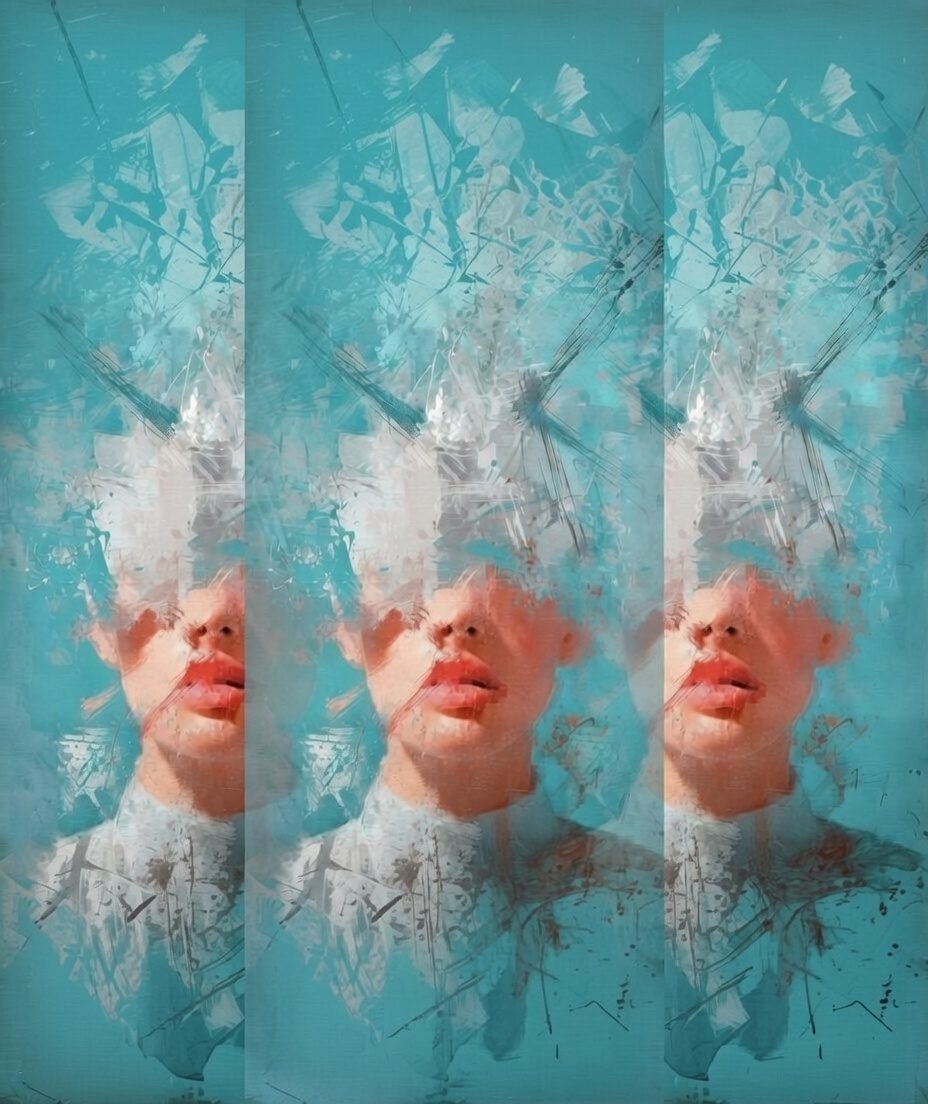
Starting this Friday, March 6, El Palau Bofarull in Reus will become the epicenter of digital art with the opening of the exhibition "El dolor creatiu: art, dona i transformació." The new show by the renowned artist Gala Mirissa features ten pieces that challenge the supposed coldness of technology, turning it into a language of resistance and emotional healing
Through a series of portraits that explore grief and overcoming, Mirissa, who lives with fibromyalgia, uses her personal experience to project the collective strength that transforms chronic pain into global aesthetic avant-garde. The exhibition is presented as one of the essential events on the cultural calendar around International Women's Day, underscoring the role of technology as a channel for female expression.
The plasticity of Gala Mirissa's pain at El Palau Bofarull
With her work, Gala Mirissa brings algorithms to life, transforming technology into a nervous system that beats, suffers and heals. Far from the conventional rigidity of digital art, her pieces possess an almost liquid fluidity, letting her ten female portraits act as visual pulsations of extreme delicacy. Through textures that evoke canvas, watercolor and organic fragmentation, the artist molds the intangible matter of grief, placing technology at the service of emotion.
Gaudí leaps into immersive art with Gala Mirissa, who will digitize the great mural of Reus
Mirissa's creative process is, in essence, an act of physical resistance against pain. The fragility of her figures, which seem to dissolve among strokes and lights, reflects an identity in constant reconstruction. This process of metamorphosis becomes palpable in Absència, the physical work that opens the show and embodies the initial wound left by the loss of a deeply loved one.
Pieces such as "Plorar fins que el buit respiri" and "Aigua Trista" use abstraction to inhabit silence and existential disorientation. As in almost all her work, all the figures on view in Reus seem to float in a space of tremendously fragile peace. In the painting "La Hereva," Gala seems to want to represent those women who, out of an excess of sensitivity, choose fantasy or golden armor as refuge and power.
Women and technology
Finally, in the work Pau Serena, Gala captures that instant in which the soul seems to have found an eternal refuge, dissolving among blue tones and clouds. It is a reminder that, even in the deepest void left by absence, art has the capacity to reconnect us with that fragile calm and make us breathe again.
Recognized by elite platforms such as SuperRare and having exhibited her works on screens in New York, Philadelphia and the ETHDenver festival, Mirissa returns to her roots to break stereotypes. Her work is a manifesto on how women can take ownership of technology, a field traditionally perceived as male, to turn it into a vehicle for collective memory.
With her exhibition, Gala reminds us that, even in the void left by the absence of a mother, art always has the capacity to make us breathe again.