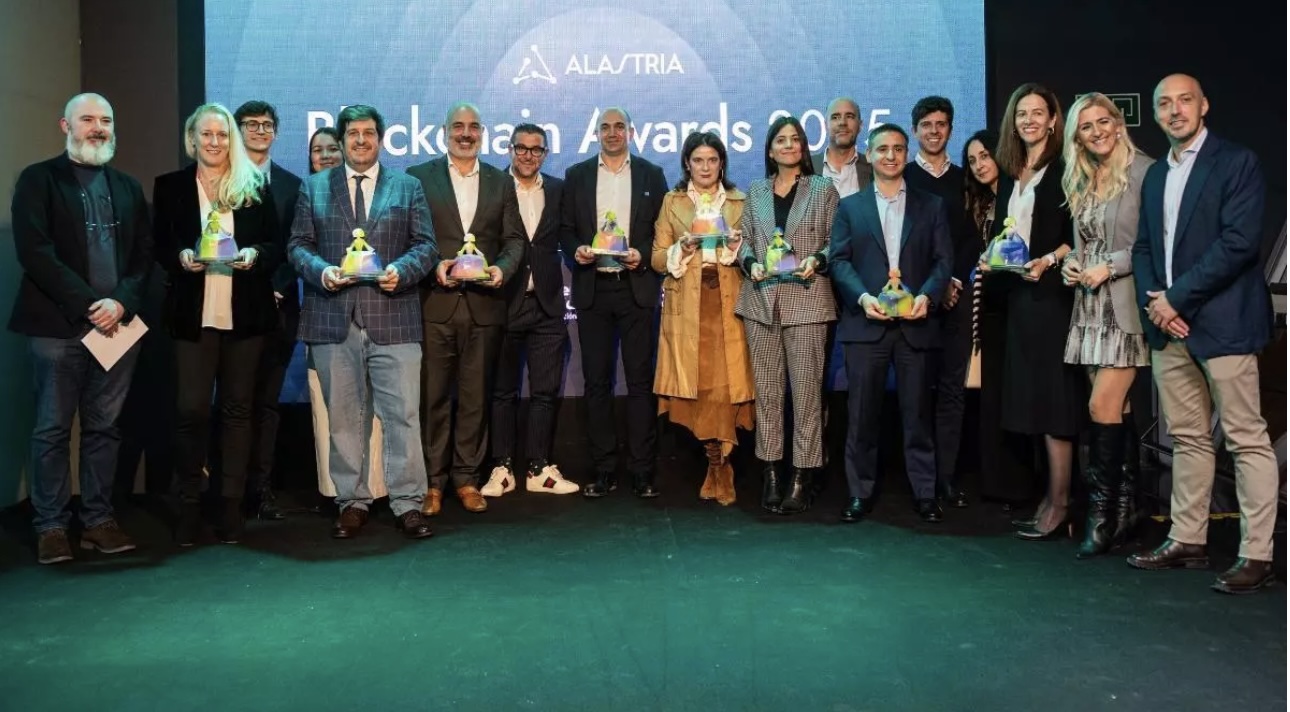
Alastria has selected 12 finalist projects for its Blockchain Awards 2026 from around 60 entries. The proposals use blockchain to issue financial assets, fund musicians, verify academic qualifications or record data on water, crops and forests. The winners will be announced on November 4 in Madrid.
The projects compete in four categories: decentralized digital identity, tokenization and digital assets, industrial uses and sustainability. The fourth edition of these honorary awards will also recognize the most influential woman in blockchain and the best journalistic or outreach work on this technology.
The selection shows blockchain applications beyond financial services. According to information provided by Alastria, the initiatives seek to make data verification easier, simplify procedures and track the journey of products and documents.
Financial assets and music rights
Asseto, Kenomic and Democratizando la Música are the finalists in tokenization and digital assets. Their proposals cover the issuance of assets, the design of economic models for tokens and the financing of artists through music rights.
Asseto, by ioBuilders, allows the issuance and management of tokenized assets and digital money. The platform integrates with existing financial systems and, according to Alastria, has been used in initiatives alongside Cecabank. Kenomic, by CALEA SL, uses artificial intelligence and simulations to design, evaluate and manage token economic models before their launch. Democratizando la Música, by The Muxic Exchange, uses the tokenization of music rights to finance artists and allow their fans to share in song revenue from 100 euros.
In decentralized digital identity, AETHERIA, BerpIA Academy and a proposal by Sybol and Repsol Soluciones Energéticas to manage energy savings certificates are competing.
AETHERIA, by Izertis, combines digital identity and artificial intelligence to turn medical reports into verifiable credentials. The goal is to make it easier for patients to control their health information.
BerpIA Academy, by WAVEXT, allows the issuance of degrees, diplomas and microcredentials whose authenticity can be verified through blockchain. According to Alastria, the academic management platform is deployed at the University of Jaén.
The project by Sybol and Repsol Soluciones Energéticas digitalizes energy savings certificate files through decentralized identities and verifiable credentials. The proposal seeks to reduce paperwork, errors and duplications.
Recording the water cycle
The finalists in industrial uses are Tediji, the Córdoba water cycle traceability initiative and WE CANN Trace. Tediji, by Talan and Coexya, offers electronic signatures and time stamping to certify documents in business processes. Time stamping makes it possible to record that a document existed at a given moment.
Santander, BBVA and Western Union will open MERGE Madrid 2026 at the Stock Exchange tomorrow
The EMACSA proposal records information on water treatment and sludge use in Córdoba. Its purpose is to allow citizens to verify the published data.
WE CANN Trace, by CTAEX and Accuro Technology, makes it possible to check the origin, treatments and analyses of each batch of hemp through QR codes.
Forests, green spaces and container returns
DEEPFOREST, GraCity and SDDRDigital compete in sustainability. All three projects use environmental data and digital records to document processes and make them easier to verify.
DEEPFOREST, by Vottun, combines artificial intelligence, satellite imagery and blockchain to track the evolution of young forests and generate verifiable evidence for carbon credits.
GraCity, by GraCity Investments, measures the impact of urban green infrastructure and certifies environmental data. SDDRDigital, by Servicios Ecológicos de Recursos para el Campo and CleanNature.io, proposes identifying each container and recording its return to avoid duplications and track its journey.
Ten finalists for the most influential woman award
The distinction for the most influential woman in blockchain has ten finalists: Amaia Jaureguizar, of Inetum; Ana Elliott, of Prosegur Crypto; Clara García Prieto, of BTL Tax & Legal; Gala Mirissa, digital artist; Mariana de la Roche, of BlackVogel; Mariona Pericas Estrada, of finReg360; Marta Ambor Moreno, of Panama Blockchain Week; Sandra Adrián, of Modo Cripto; Silvia Mogas, of Blockchain Marketing Boutique; and Sol Cinosi, of AWC/Recoveris.
The winner will be chosen through a participatory process open to the sector. The award for the best journalistic or outreach work has received 12 entries and its winner will be announced during the ceremony.
The ceremony will be held on November 4 at 18:30 at the Movistar Arena in Madrid. Alastria members will take part in choosing the winning projects as the sixth member of the jury, alongside the five experts who have evaluated the entries. The winners will receive the meninas created by artist Felipao.