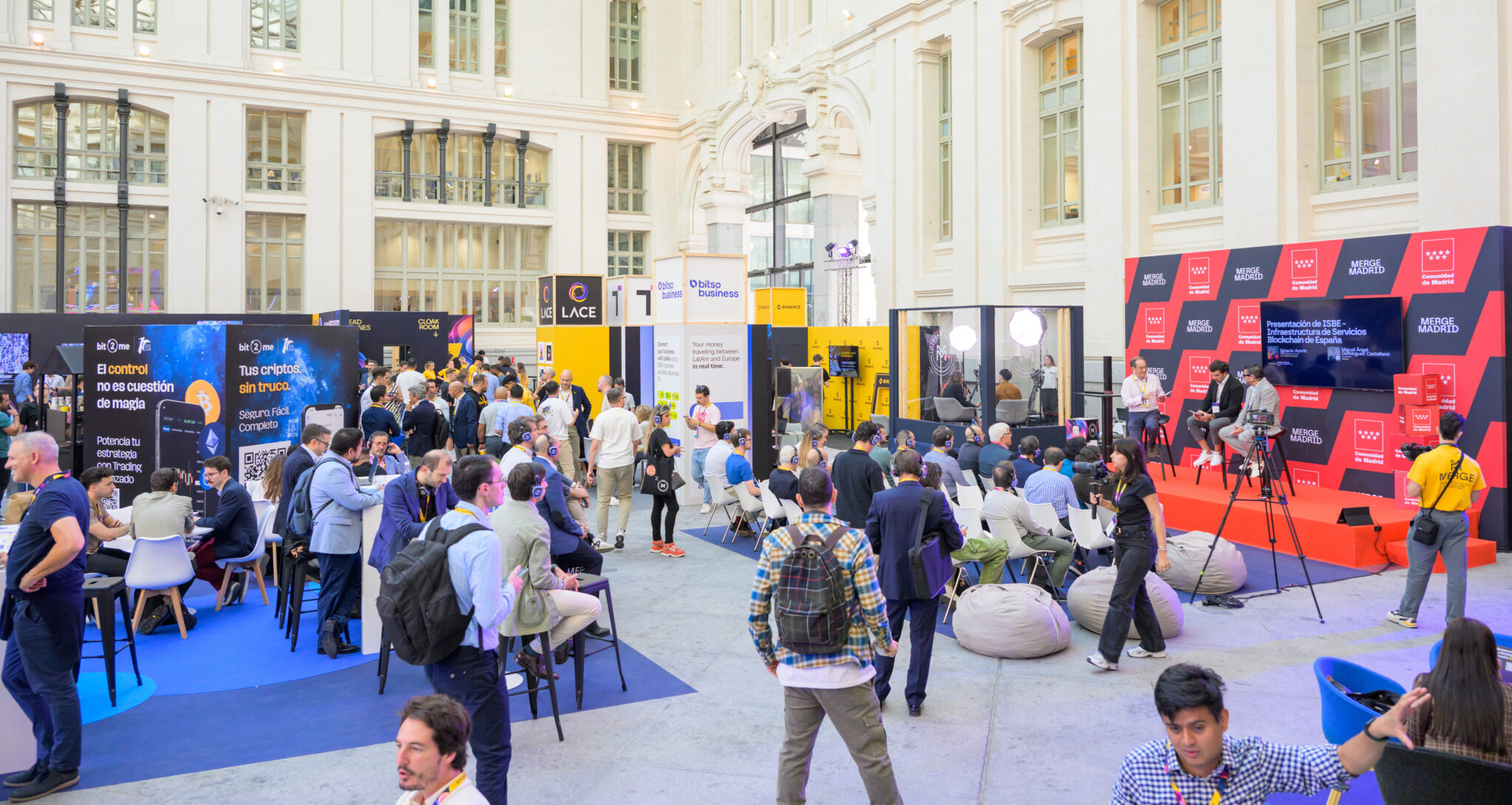
Stablecoins, international payments and asset tokenization will be the focus of MERGE Madrid 2026, which will bring together representatives of banks, investment platforms and payments companies from 27 to 29 October. Santander, BBVA, Western Union, Trade Republic and Qivalis are among the announced participants in an edition that will showcase various projects for incorporating digital money into financial services.
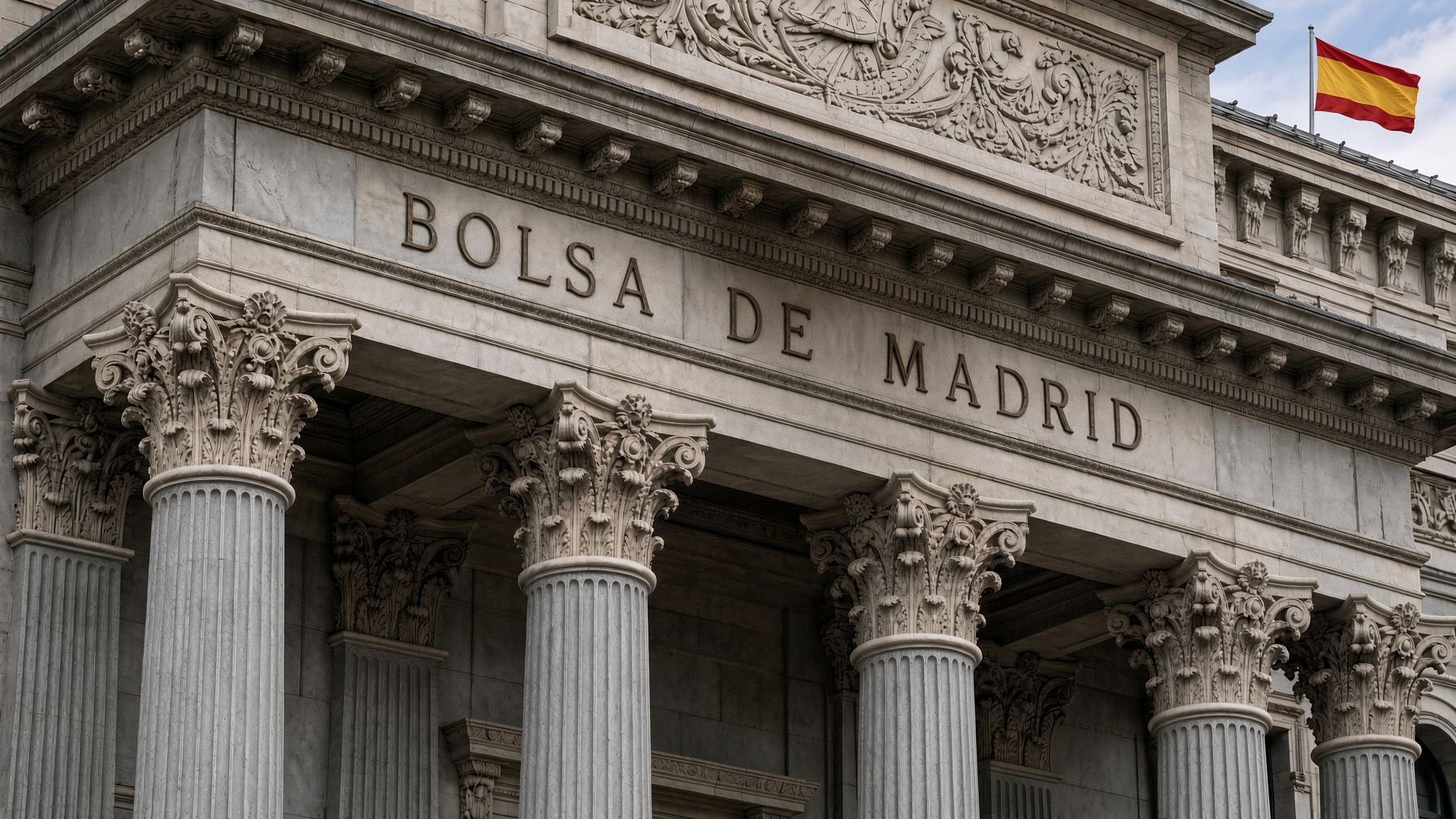
According to the organizers, the event will feature more than 250 international speakers and expects to exceed 3,000 attendees. It will begin on Tuesday 27 October at the Madrid Stock Exchange with the Institutional Summit, aimed at banks, investors, regulators and industry leaders, followed by a private cocktail reception. Palacio de Cibeles will host the main conference on 28 and 29 October.
Among the confirmed participants are Coty de Monteverde, Santander's global head of Crypto and Digital Assets, and Francisco Maroto, BBVA's head of Blockchain and Digital Assets. The lineup also announces representatives from Mastercard and Ripple.
Different models of digital money
One of the projects present on the Merge stage will be Qivalis, the alliance bringing together 37 financial institutions from 15 European countries to promote a stablecoin denominated in euros. Its goal is to facilitate payments and transfers available 24 hours a day, as well as the settlement of digital assets in a regulated environment.
MERGE Madrid Startup consolidates its global reach with finalists from Europe, the US and the Emirates
Santander, which is not part of Qivalis, will address another international initiative in which it participates alongside BBVA and 19 other financial institutions. The group plans to launch a dollar stablecoin in the first half of 2027 and later expand its offering to other G7 currencies, with priority for the euro.
Western Union will present USDPT, its dollar-pegged stablecoin, issued by Anchorage Digital Bank on the Solana blockchain. The company is integrating it into its services network to facilitate money transfers and payments, with the possibility of converting those digital dollars into local currency through its international network.
Trade Republic will address how to bring digital assets closer to retail investors and incorporate them into the investment and savings services they already use. The sessions will seek to explain how companies and citizens can use these technologies: to send money to another country, make payments or complete the buying and selling of assets represented by tokens.
Reserves, guarantees and coexistence with bank money
The agenda will include the debate on who should issue stablecoins, how to protect their reserves and what guarantees users need. It will also analyze their coexistence with bank deposits and with the future digital euro. The event places these questions in the context of the European MiCA framework and the debate on the weight of dollar-pegged stablecoins in digital payments.
On the issues to be addressed at Merge Madrid, Paula Pascual, founder of MERGE, says that for the first time, banks, fintechs and major payments companies are not coming to debate whether stablecoins will have a role in the financial system, but to explain how they are building and integrating them and what specific problems they want to solve with them.
In addition to stablecoins and payments, the program will also address asset tokenization, custody services, regulation, capital markets, the future of Bitcoin and the use of artificial intelligence in finance.
Tokenization will have one of its key sessions on Wednesday 28 October, from 17:10 to 17:50, on the MERGE stage, with the panel What is really being tokenized in 2026?. Moderated by Covadonga Fernández, director of Observatorio Blockchain, it will feature Héctor Torres, CEO of TR Capital; Eric Sánchez Gálvez, CEO and co-founder of Reental; and Pablo Gómez, founder and CEO of Metlabs.
The debate will address what is really already working in tokenization, how to bring it closer to citizens and the advantages it offers for investing and financing. It will also discuss the possibilities of selling tokenized assets or the difficulties in extending their use, with a look at the situation in Spain and experiences such as that of El Salvador.