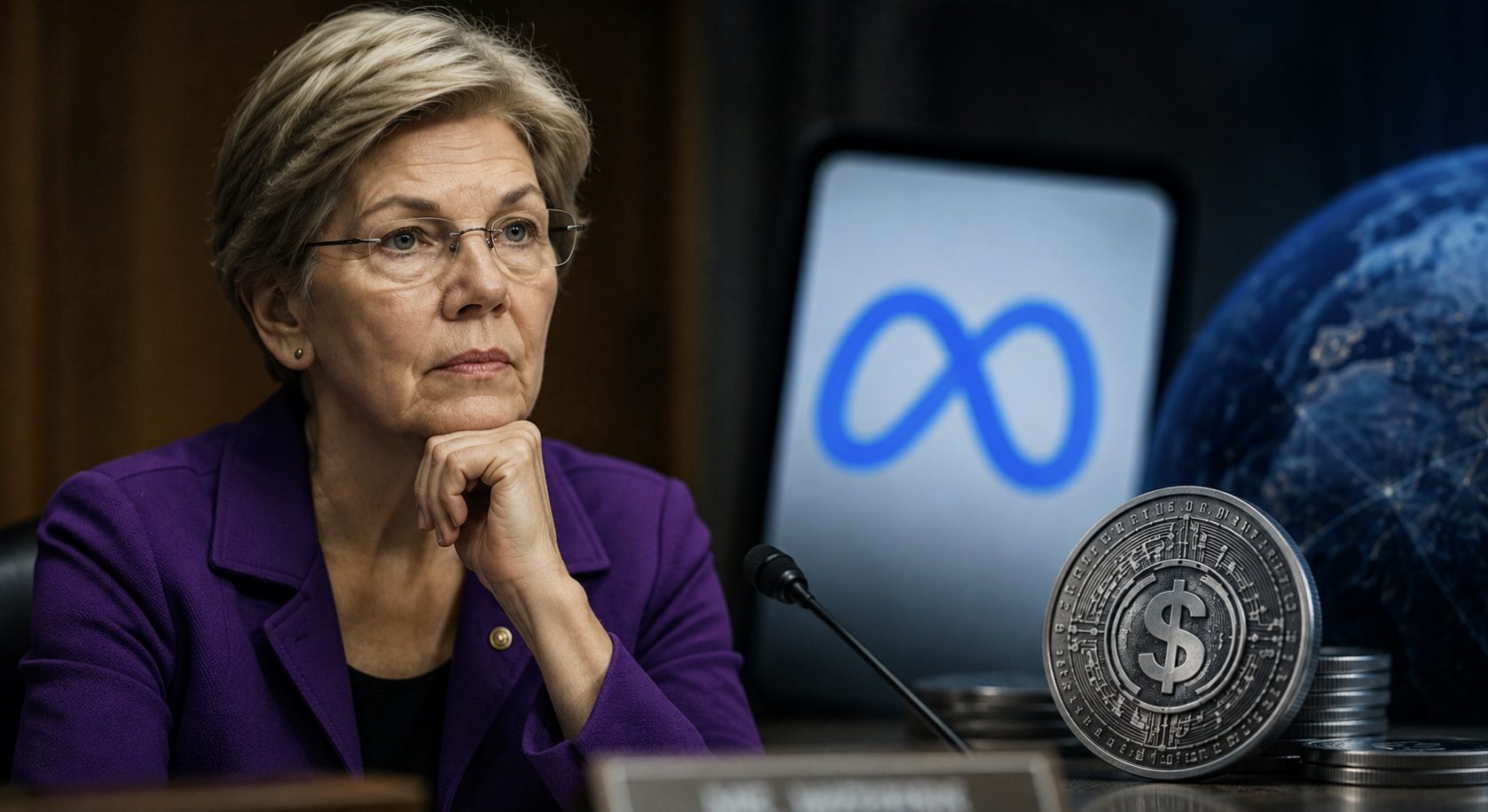
US Senator Elizabeth Warren has revived her offensive against Meta over its use of the USDC stablecoin to pay creators on Facebook, following the collapse of the Libra project, the private cryptocurrency that the company of Mark Zuckerberg tried to launch in 2019.
In a letter sent directly to Zuckerberg, Warren expresses concern over reports suggesting that Meta may be preparing to integrate stablecoins into its payments ecosystem and digital platforms. The senator, one of the most historically critical voices against Libra and later Diem, warns that any move by Meta in this area could have serious consequences for competition, privacy, the integrity of the payment system and financial stability.
Meta begins paying Facebook creators with the USDC stablecoin
"Any attempt to control, influence or give preference to a stablecoin on Meta's platforms, including one issued by a third party, could have serious consequences for competition, privacy, the integrity of our payment system and financial stability," Warren writes.
The return of Libra's ghost
Warren's intervention reopens one of the tensest episodes in the relationship between Silicon Valley and Washington on financial matters. In 2019, Meta, then Facebook, announced Libra, a stablecoin designed to operate within its vast social and payments ecosystem. The project triggered an immediate political reaction in the United States and Europe, where regulators, central banks and lawmakers warned of the systemic risks of allowing a large private technology company to issue a currency with global reach.
Political pressure eventually buried the project, which was later renamed Diem before disappearing for good. Warren was then one of the most aggressive opponents of the initiative. The senator argued for years that Meta could not simultaneously become a social platform, a payment system and a private monetary issuer without putting competition and economic stability at risk.
Now, according to new reports cited by the lawmaker herself, Meta is reportedly running active tests with stablecoins and preparing a broader integration for the second half of 2026.
Warren takes aim at the GENIUS Act
The letter also becomes an indirect attack on the new US stablecoin legislation, the GENIUS Act. Warren argues that the rule contains regulatory gaps that could allow large technology companies to re-enter the stablecoin business using indirect structures or partnerships with third-party issuers.
According to the senator, Meta could use externally issued stablecoins while retaining effective control over distribution, visibility or integration within its digital platforms, thereby sidestepping part of the regulatory scrutiny that ultimately destroyed Libra.
"Meta could use such a structure to evade regulatory scrutiny, further consolidate its economic power and further erode financial privacy and competition," she warns in her letter.
Warren's concern is not limited to monetary control. She also points to the immense volume of financial data Meta could accumulate if it incorporates stablecoins into applications used by billions of people such as Facebook, Instagram or WhatsApp.
One of the central points of the inquiry opened by Warren is the possible role of MetaPay. The senator questions whether Meta plans to progressively transform its payment system to allow users to store stablecoins directly within the platform, beyond simply saving traditional payment credentials.
"Meta has not provided information about its plans related to stablecoins, such as the nature of a possible business relationship with a third-party stablecoin that would be integrated into its platform," she says. The lawmaker also denounces that Meta avoided clarifying whether it intends to obtain direct or indirect control over those stablecoins or over the associated payment mechanisms.
The senator's doubts arise after Meta responded to another inquiry launched in 2025 by Senator Richard Blumenthal by stating that it had no plans to issue its own stablecoin. However, the new reports about active testing and future integrations have once again set off alarms in Washington.
Stablecoins, Big Tech and financial sovereignty
Warren's offensive comes at a particularly sensitive moment for the global stablecoin debate. While Europe hardens its rhetoric with the ECB president, Christine Lagarde, warning today of the risks to European monetary sovereignty, the United States is moving toward regulatory normalization that could definitively open the door to the mass integration of stablecoins into technology platforms.
The fear of many regulators is that companies like Meta, thanks to their global scale and distribution capacity, could transform private stablecoins into dominant payment infrastructures before central banks manage to deploy public alternatives or sovereign digital currencies.
"Any new product, especially those related to payments and financial services, should be treated with skepticism," Warren says. The senator has requested formal answers from Meta before May 20, 2026.