The financial system is changing rapidly and the line between traditional assets and the digital world is increasingly blurred. According to the Macroprudential Bulletin published by the European Central Bank (ECB) in April 2026, stablecoins, tokens pegged to currencies such as the dollar or the euro, have gone from a niche to a key factor in demand for government debt.
This shift marks a turning point in how states finance their spending. Blockchain technology (DLT) is beginning to integrate directly into the financial system, influencing the way major economies manage their fiscal policy.
The US engine: cryptoassets as a liquidity backstop
In the United States, the role of digital asset issuers has moved from the periphery to the center of the debate on debt sustainability. The main issuers of dollar-referenced tokens (Tether and Circle) have established themselves as massive holders of US Treasury bills, acting de facto as a private liquidity fund that underpins the solvency of the federal government.
Tokenization forces state oversight into real time
The scale of this change is evident in the figures. With a market capitalization that already exceeds $260 billion (in USDT and USDC alone) and institutional projections suggesting growth toward $2 trillion in the coming years, these issuers manage government debt portfolios larger than those of many developed countries.
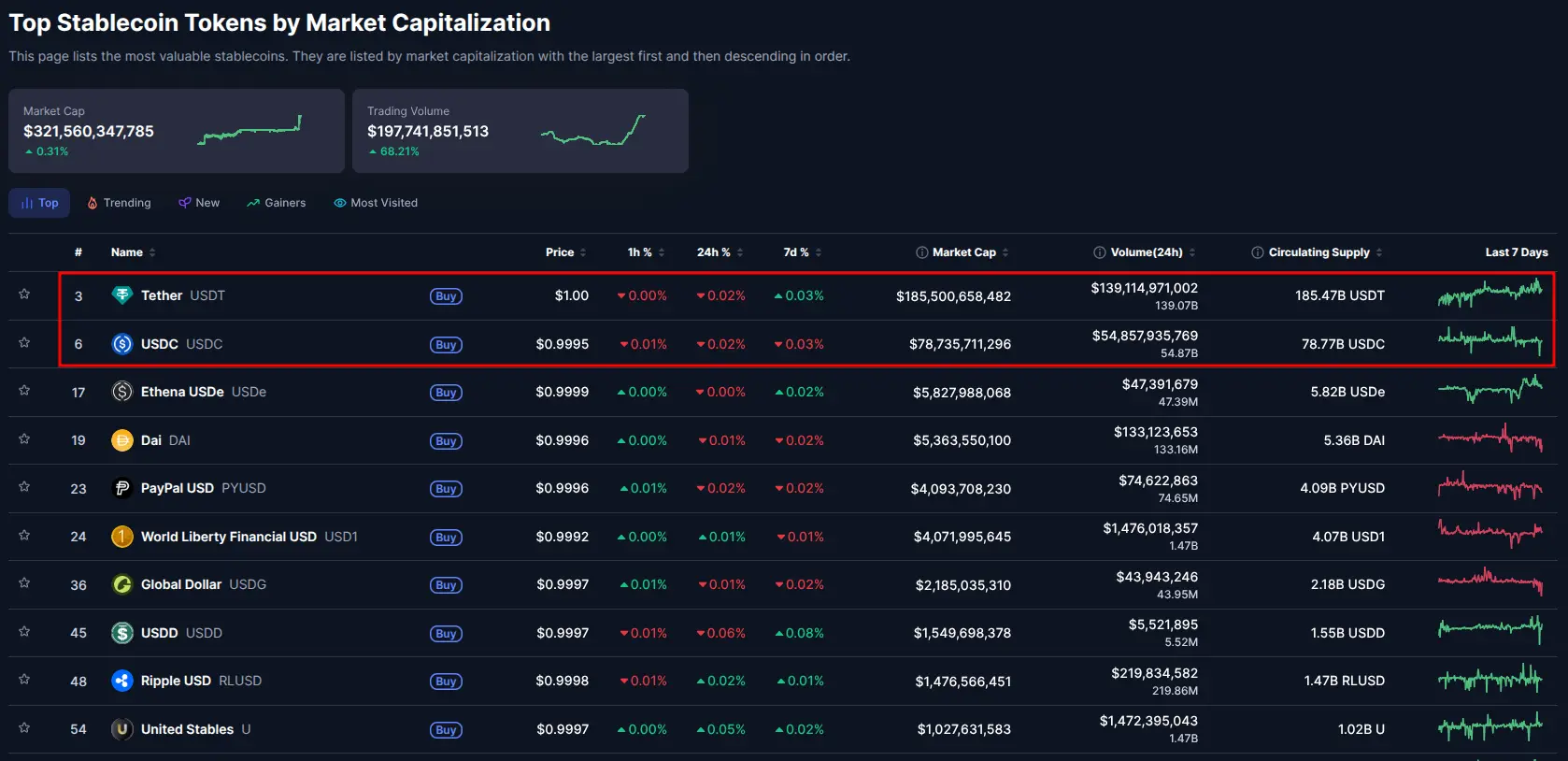
Against this backdrop, Treasury Secretary Scott Bessent recently noted that a thriving cryptoasset ecosystem boosts private-sector demand for Treasury securities, which could potentially lower the government's borrowing costs and help manage the national debt.
However, this model is not without debate. The premise that tokens increase net demand for bonds assumes that the capital flowing into these assets is new or comes from retail deposits. If, by contrast, large institutional investors simply shift funds from traditional bond portfolios into token reserves, the net impact on total demand could be neutral or even negative, depending on the exact composition of issuers' reserves.
The European awakening: MiCA and the institutionalization of the digital asset
While the United States moves forward driven by private-market dynamics, Europe has opted for an approach based on regulatory clarity. The full implementation of the MiCA (Markets in Crypto-Assets) regulation has transformed the landscape for euro-denominated tokens.
Under this regulation, issuers of e-money tokens are required to hold at least 60% of their reserves in bank deposits or low-risk financial instruments, with a specific emphasis on highly rated eurozone sovereign bonds.
Why Wall Street tokenization is not playing at crypto
This legal mandate has generated a steady flow of capital into European government debt. The data are revealing: the market for euro-referenced tokens has grown exponentially, from just €50 million to more than €450 million in the past year. Top-tier banking institutions, such as Société Générale through its SG Forge subsidiary, already issue their own institutional tokens, while consortia of European banks collaborate on launching shared infrastructures.
But in addition, since 2021, approximately €4 billion in tokenized bonds have been issued in Europe. These instruments are not just digital representations of traditional debt, but native on-chain assets that enable issuance and settlement processes far more agile than conventional systems.
Impact analysis: How does it boost the regional economy?
The integration of tokenization into sovereign bond markets is not just a matter of purchase volume; it is a qualitative improvement in financial infrastructure that offers three fundamental competitive advantages.
Settlement efficiency and transparency
One of the greatest technical benefits of tokenization is atomic settlement (Delivery versus Payment, or DvP). In the traditional financial system, settling a bond can take several days (T+2 or T+1).
On a DLT network, the transfer of bond ownership and payment in tokens occur simultaneously and instantly. This drastically reduces counterparty risk and frees up capital that would otherwise be locked in clearing processes.
Diversification of the investor base
Tokenization facilitates the fragmentation of high-value assets. By allowing a sovereign bond to be split into smaller digital fractions, it opens the door to retail investors and small institutions that previously faced barriers to entry due to high minimum investment amounts.
Moreover, the global nature of cryptoassets allows the debt of a European country or the United States to be accessible to investors anywhere in the world with minimal friction, increasing the resilience of demand in times of crisis.
Energizing digital finance
Tokenized sovereign bonds are becoming the preferred collateral within institutional-grade decentralized finance (DeFi) protocols.
As they are considered low-risk assets, their use as collateral to obtain loans or generate digital liquidity allows public capital to "work" more efficiently within the new digital economy, connecting the soundness of states with the innovation of token markets.
The IMF urges public control of tokenization to avoid financial chaos
Systemic risks and monetary sovereignty
Despite the benefits, monetary authorities maintain a stance of active vigilance. The main risk identified is interconnectedness. If a massive token issuer experiences a liquidity run (a digital "bank run"), it would be forced to quickly liquidate its sovereign bond reserves to meet withdrawals. This forced sale of billions of dollars in government debt could destabilize bond prices in the traditional market, affecting global financial stability.
Piero Cipollone, a member of the ECB's Executive Board, has warned of the possibility that Europe could lose its monetary sovereignty if the digital payments market is dominated by a few foreign token issuers. For this reason, the Eurosystem insists that any tokenized asset infrastructure must operate under strict regulatory standards and, preferably, have settlement mechanisms backed by central bank money, such as the future Digital Euro.
Toward a unified financial infrastructure
In this way, the tokenization of sovereign bonds represents the definitive bridge between traditional finance and the digital era. In the United States, private demand for tokens is acting as a new support for the Treasury, while in Europe, the MiCA framework is forcing an orderly and secure integration of cryptoassets into the banking system.
Securitize, a tokenization giant, will debut on Nasdaq in April with BlackRock and NYSE
This convergence not only improves liquidity in debt markets, but also redefines the role of the state in the digital economy. Bonds are no longer just paper or records in centralized databases; they are becoming programmable assets that circulate on a global, transparent infrastructure operating 24 hours a day. The ability of regions to lead this technological transition will determine their relevance on the financial map of the next decade.