A master account at the Federal Reserve is the banking equivalent of a wall socket: without one, any entity has to piggyback on someone else's cable. Custodia Bank, a Wyoming-based bank specializing in bitcoins, had spent five years trying to get its own through the courts, with lawyers and with patience. On November 16, 2026, the US Supreme Court declined to review its case and closed the last judicial avenue it had left.
The decision appears on the court's order list under number 26-62 with the usual notation, certiorari denied, which in practice means the Supreme Court does not want to look at the file again. That leaves standing the Tenth Circuit ruling, which sided with the Federal Reserve Bank of Kansas City and established that the system's regional banks may reject applications even when the applicant meets the legal requirements.
The ruling does not change any written rule, it changes the interpretation of who decides, and that is worth as much as a rule for anyone wanting to set up a bank with cryptoassets. If regional banks have discretion, the path stops being about meeting formal requirements and becomes a conversation.
Five years of applications and denials
Custodia Bank is a special-purpose depository institution in Wyoming, a figure that prohibits lending out deposited money and requires holding liquid reserves, and that restriction was part of its argument before the regulator. With that license in hand, it applied for a master account at the Federal Reserve Bank of Kansas City in October 2020. Three months later, the regional bank confirmed to it in writing that it was legally eligible and that there were no "obstacles" in its file.
In August 2021 the entity also applied to become a member of the system. While both applications sat idle, the Board of Governors published guidance in August 2022 for evaluating requests for accounts and services. That guidance placed entities without federal insurance and without supervision by a federal banking agency at tier three, the group that receives the strictest scrutiny.
The account published by Bitcoin Magazine that same Monday places the denial on January 27, 2023. The regional bank argued that Custodia had an "unprecedented" business model narrowly focused on cryptoassets, and that this set it apart from the profile the system expects of its members.
The courts validated that reasoning twice and the appellate ruling set the standard that now stands firm. The Tenth Circuit concluded that the law does not require granting the account to an applicant that meets the requirements, and the Supreme Court has decided not to look at it again.
The date of November 16 thus goes down in the sector's calendar as the day the judicial route stopped being a realistic option for this type of entity, at least under the current framework.
What does the denial mean in practice?
Without a master account, a state-chartered bank depends on a correspondent to move money. That correspondent charges for the service, imposes its own controls and can cut the relationship if it deems it risky. For a crypto bank, that dependence is a commercial vulnerability: the day the partner decides to reduce its exposure to the sector, the business is left without plumbing.
The case also matters for what it says about the rest of the system. Custodia was not an unlicensed company or an opaque fund, it was a state-authorized bank with full reserves and audits. If even so it could not get the connection, the message for any similar entity is that a state license is not enough to access federal payments infrastructure.
The decision also leaves intact the route the sector has used in recent years: operating with state licenses, using correspondents and building services on top of banks that do have a master account. That model works and depends on the goodwill of a third party, which is exactly the problem Custodia wanted to solve.
The judicial closure does not stop the entity. Custodia can keep operating with its license, serve its clients and seek partners, but it loses the possibility of becoming a bank directly connected to the payments system.
Discretion as doctrine
The ruling that stands introduces a principle that goes beyond this case. The Federal Reserve's regional banks do not apply an automatic rule when they evaluate an application, they exercise judgment. That judgment includes the applicant's risk profile and, according to the court, is not limited by the fact that the entity meets the formal requirements.
For the sector's lawyers, the consequence is that litigation loses value as a strategy. If the regulator has discretion, the useful route is political and regulatory, not judicial. And that route moves at the pace of nominations and of each administration's priorities, not at the pace of contracts.
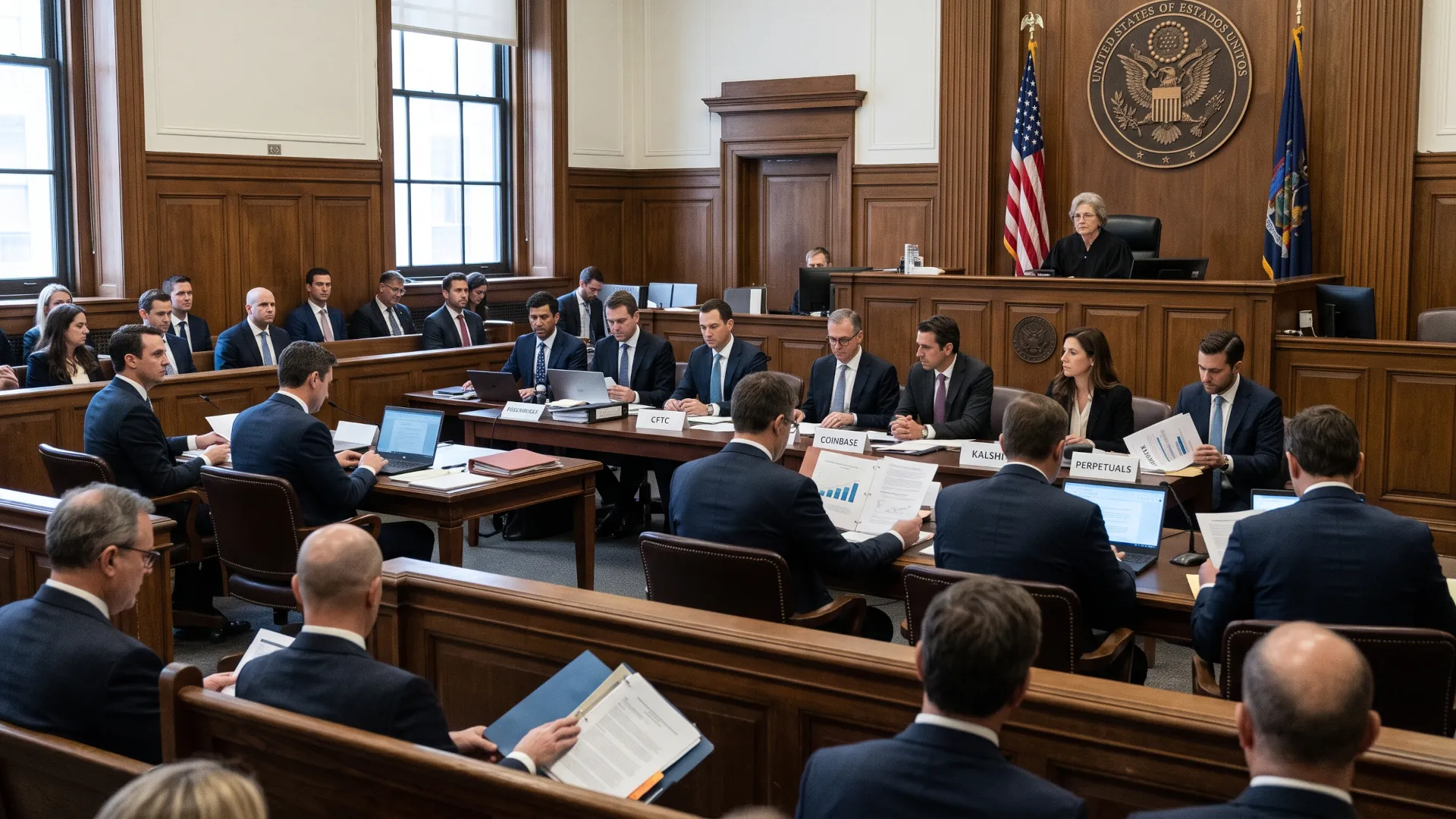
That approach has already been seen on other fronts this year. The CFTC and its fight over single-stock perpetuals showed how rules are decided at tables where the sector has to negotiate, and the lawsuit by the former Ethereum Foundation executive against Vitalik Buterin reminded us that legal conflict is also fought within the ecosystem itself.
None of this means the doors are closed. It means they open one at a time, on a discretionary basis and with no guarantee that the next applicant will receive the same treatment.
Crypto banks take note
The first effect is on expectations. For years, part of the sector presented the master account as the natural step for a regulated crypto bank, and that promise no longer holds. Integration with the traditional financial system now runs through private agreements with entities that do have access, and those agreements are negotiated on terms.
The second is concentration. If crypto banks depend on a few correspondents, risk accumulates in those entities and in the clients that share the same plumbing. An incident at one of them affects dozens of clients at once, and that interdependence does not appear in any supervisory report because it is not a formal relationship of the system.
The third is timing. The decision comes at a moment of weak prices and scrutiny of corporate treasuries, and that context makes it harder for an investor to finance a banking project whose access to infrastructure depends on a third party.
A bank without a master account can operate and can grow, but it competes with a structural disadvantage that is not measured in capital and does not appear on any balance sheet, because it is paid for in time and in dependence.
The question left open
The Supreme Court has not said that crypto banks cannot have a master account. It has said it will not review whether the denial was correct, and that difference leaves the door ajar for another applicant with another profile and another regulator. The doctrine of discretion is broad, and so is the room to grant.
What has become clear is the cost of trying through the courts. Custodia spent five years and a fortune on lawyers to obtain a ruling that confirms the authority of the regulator that told it no. The precedent it leaves is useful for the system and costly for the one who set it.
For the reader who follows crypto regulation, the lesson is that the important battles are no longer fought in the courts. They are fought in public consultations, in nominations and in the guidance nobody reads until it changes the business.