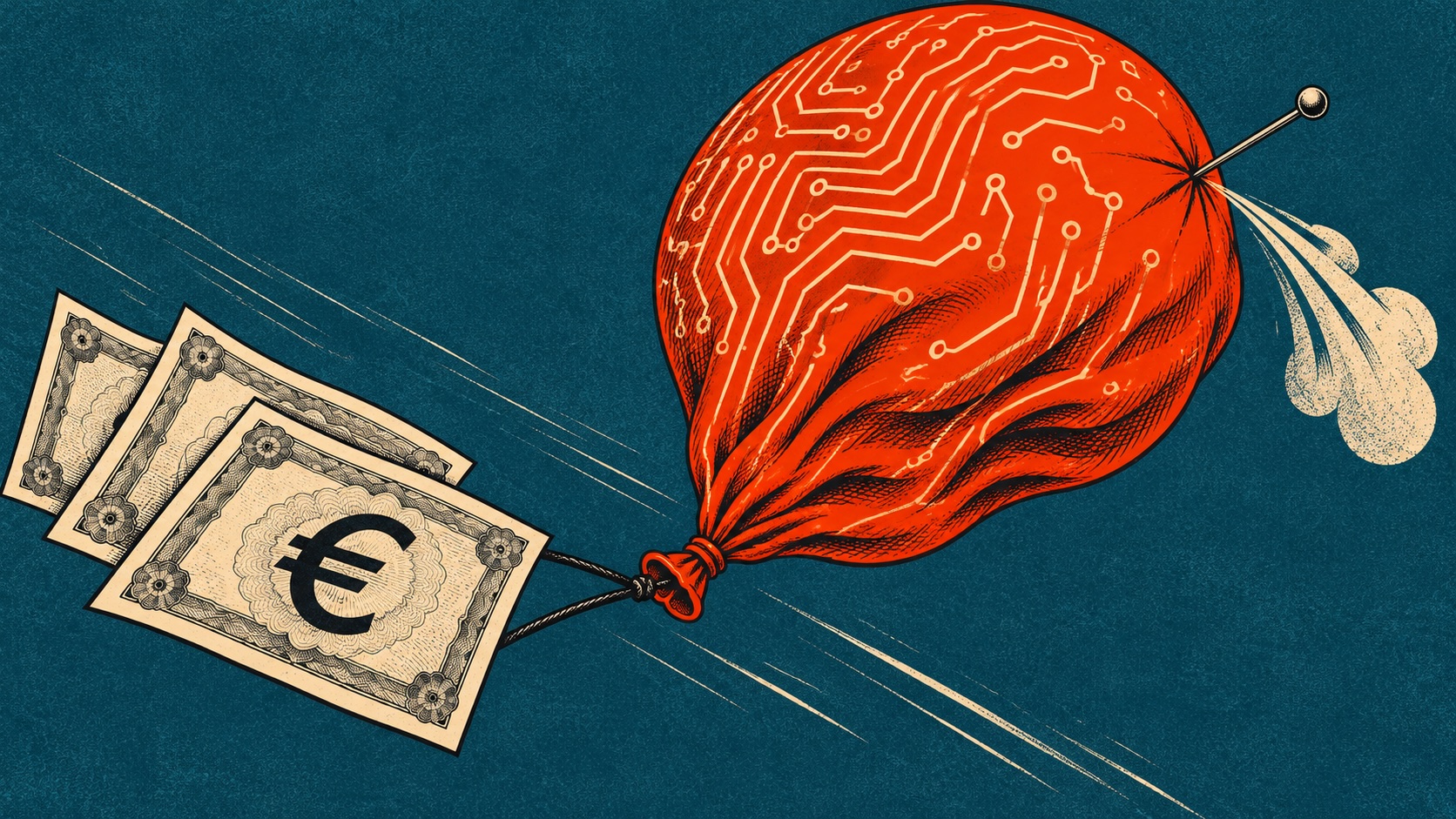
The European Central Bank (ECB) warns that if artificial intelligence revenues fall short of expectations, a slump in technology stocks on Wall Street could drag down the euro-denominated bonds bought by European insurers and pension funds. US big tech already accounts for close to 8% of the investment-grade euro corporate bond market with more than ten years to maturity.
The AI bust and euro-denominated bonds
The analysis, a preview of the November financial stability report, comes as the euro area economy has lost momentum and inflation is rising. GDP grew 0.4% in the third quarter, down from 0.6% in the second, and Eurostat's preliminary estimate put October inflation at 4%. On top of that context comes the risk the ECB flags for the coming years. If tech companies keep increasing their euro-denominated issuance, companies and governments could have to offer higher returns to attract long-term financing.
It is the ECB's second analysis of AI and financial stability in two days. The one on Monday, November 16 examined how a cyberattack on a shared technology provider can disrupt the services of several banks at once. The new study examines another contagion channel: the exposure of equity and bond portfolios to the business prospects of a small group of tech companies.
The big cloud and AI infrastructure operators, such as Amazon, Microsoft and Alphabet, are increasingly turning to debt markets to finance data centers and equipment. So far in 2026, these companies have issued more than $200 billion in investment-grade bonds denominated in that currency, according to the analysis. They have also tapped the euro market, where their new issues have maturities between two and six years longer than those of other comparable companies.
How a Wall Street slump reaches euro-denominated bonds
That maturity explains why their presence is concentrated in long-term debt and why it will remain relevant even if the companies reduce their issuance. It also creates a mismatch, since the equipment bought today to train and run AI models can lose value long before the bonds used to finance it mature. For the ECB, the ability of those investments to generate sustained revenue will be decisive.
The arrival of these companies widens investors' options, with issuers of good credit quality and longer-duration bonds. At the same time, it increases their exposure to the US economy. US companies, across all sectors, already account for close to a fifth of the investment-grade euro corporate bond benchmark index.
If AI revenues disappoint, shareholders may lower their profit expectations and sell. In the debt market, investors may demand a higher return to lend to these companies. When that happens, the price of bonds already in circulation falls. A portfolio combining US tech stocks and euro-denominated debt can thus suffer losses on both positions.
The authors of the report note that since 2025, Nasdaq declines have tended to coincide with sharper increases in the premium companies pay to borrow in euros. That relationship has weakened recently. The ECB therefore warns that if big tech keeps gaining weight in bond indices, a revision of their growth prospects could be felt increasingly in both markets.
Insurers and pension funds
Euro area insurers and pension funds, which buy long-term bonds to meet future commitments, hold a slightly higher share of these tech companies' debt than their benchmark indices. At the same time, they keep their preference for sovereign bonds and give relatively less weight to the debt of other companies and of issuers such as regional and local governments. The changes are small and the authors consider that, for now, the evidence that tech companies are crowding out other issuers is limited.
In a letter to the European Parliament dated November 6, ECB President Christine Lagarde noted that large tech issues had had small and temporary effects on the timing and pricing of other corporate issues. Until then, the ECB had also not detected a significant impact on the financing cost of EU governments. If the supply of AI-linked bonds keeps growing and investor demand does not rise at the same pace, other companies could find it harder to place their debt and governments could be forced to pay more to finance themselves long term.