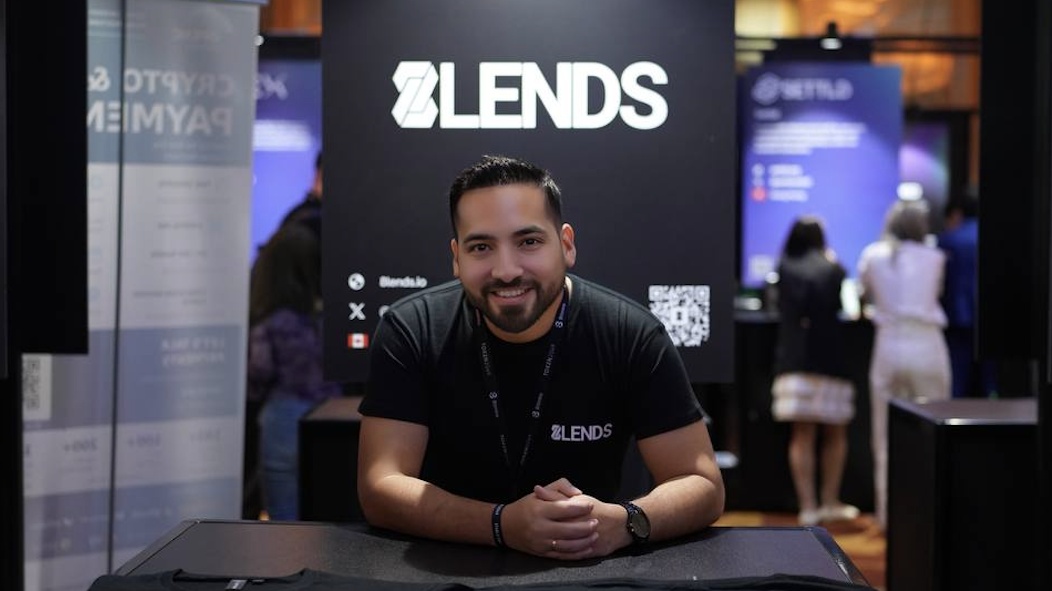
At TOKEN2049 Singapore, held on 7 and 8 October at Marina Bay Sands, tokenized real-world assets (RWA) and private credit were among the sector's main talking points. While the market debates how to move real-economy lending onto the blockchain, TOKEN2049 brought together players already working to make it a reality. One of them was 8lends, a platform that connects investors with loans to small and medium-sized enterprises.
RWA growth faces an access problem
Investors are looking beyond native cryptocurrency assets to find opportunities linked to the real economy. Tokenized real-world assets (RWA) offer a route into these markets through blockchain-based financial products.
The market has grown rapidly. According to a joint study by Cointelegraph Research and 8lends, the value of on-chain RWA, excluding stablecoins, rose from approximately $2.7 billion in January 2024 to around $30 billion in April 2026. On-chain private credit accounted for around $6.1 billion.
Despite rising demand, access remains a barrier. Many private credit products are aimed at institutional or accredited investors and require high minimum investments. Centrifuge's ACRDX fund, for example, has a stated minimum investment of $500,000 and is restricted to eligible non-US accredited investors. These requirements put such products out of reach for most retail investors.
At the same time, small businesses face a different constraint: access to financing. Banks continue to tighten their policies and apply increasingly complicated procedures that prevent even eligible entrepreneurs from obtaining traditional credit. As a result, European SMEs face an annual financing gap of around €39 billion.
What makes on-chain private credit work
Despite the access barriers facing on-chain private credit, hybrid models are already up and running. They combine blockchain-based transactions with traditional credit assessment and collateral enforcement. At 8lends, for example, investors fund USDC loans through smart contracts on Base, from 100 USDC. Repayments arrive directly in their wallets. The work off the blockchain is handled by Maclear AG, a Swiss financial intermediary that carries out borrower due diligence checks, assigns credit ratings from AAA to D and structures collateral such as real estate, machinery and equipment in line with local law.
What investors actually do with capital in weeks like this
The model also defines what happens when a borrower fails to repay a loan. If a loan falls more than 60 days behind, loans designated as eligible for BuyBack are repurchased under the applicable terms. For other loans, collateral is enforced. This distinction matters: the blockchain can automate the movement of funds, but borrower assessment and debt recovery still depend on real-world legal and financial processes.
The approach has already proven viable and efficient. As of 6 October 2026, 8lends reported having funded $23.1 million through 701 loans to 27 companies in 13 countries. A total of 300 loans had been fully repaid and $11.8 million had been returned to investors.
"As highlighted at TOKEN2049, tokenization alone does not turn an asset into a viable investment. The underlying credit claim must be backed by reliable credit assessment, enforceable collateral and clear recovery procedures. Broadening retail investor access also matters, but it must be done with the same attention to credit quality and investor protection. The next stage of on-chain private credit will not depend simply on bringing more assets onto the blockchain, but on making the financing behind them work in practice," adds Ivan Marchena, Communications Director at 8lends.
More information about 8lends and the opportunities it offers SMEs and investors here
8lends is a Swiss-backed lending platform that allows individual investors to fund loans to real businesses and earn up to 25% a year, with settlement in USDC on the blockchain.
The platform launched in 2025 as a spin-off from Maclear, a regulated Swiss fintech that has facilitated more than €49 million in business loans with no capital losses for investors to date. While Maclear serves traditional investors, 8lends opens the same institutional-grade model to the global crypto economy, without the volatility of trading or the opacity of DeFi.
Each 8lends loan is secured by real business assets, assessed against more than 40 risk parameters and governed by smart contracts that automate monthly repayments. The platform is independently audited and supervised by PolyReg, Switzerland's leading financial self-regulatory body.