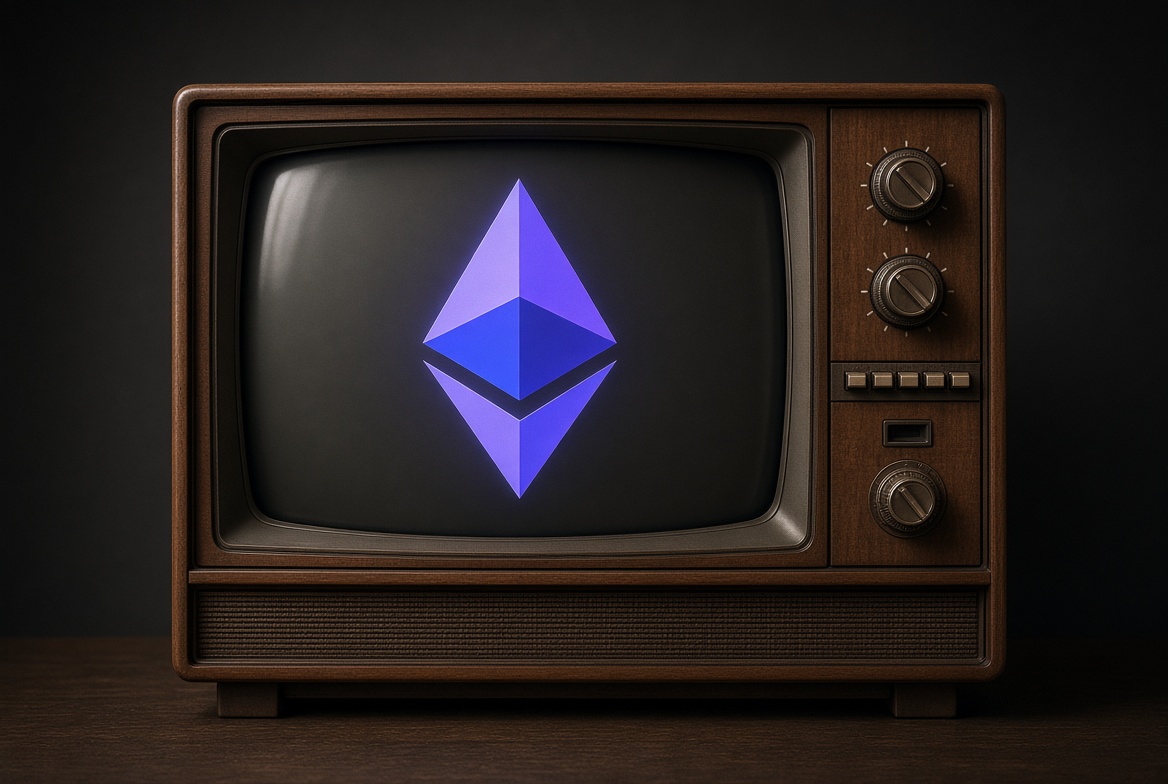
Ethereum will launch a television channel tomorrow, November 4, with more than 20,000 talks from 10,900 speakers, recorded since 2013 at nearly 1,000 events and linked to 244 communities. It is called Ethereum TV and will bring together close to 14,000 hours of conferences, debates, workshops and podcasts to discover how the network has been built and discussed.
The project stems from an idea by Mihai Alisie, co-founder of Ethereum and Bitcoin Magazine, who is involved as a funder and advisor. Its purpose is to bring together conversations scattered across channels and organizers so they can keep finding audiences after each event ends.
Searching for talks
The platform will offer three ways to access the archive. The first will be a search engine to locate talks by speaker, topic, event, community or podcast. The catalog will be organized into twenty topics and more than a hundred subtopics. The second will allow users to follow people, communities and specific subjects. Their new talks will appear in the user's content space as they are added.
The third recreates the experience of turning on the television, choosing a channel and finding a broadcast already in progress. Everyone connected to that channel will see the same talk at the same time.
According to its organizers, assembling the archive has taken much of the past year. The work has included recovering old recordings, correcting dates and cities and sorting talks by speakers whose names appeared spelled in different ways.
More than a million fragments
The team says it has indexed more than a million fragments with timestamps, each about 45 seconds long. It is also exploring artificial intelligence tools, including Jev, to locate relevant quotes when someone asks the archive a question. On that basis it is preparing Ask Ethereum TV, a feature that will search for answers in the speakers' own words. Another announced tool, Argument Maps, will allow users to follow who said what as an idea was debated over time. The announcement does not specify when they will be available.
Speakers will be able to gather their talks on a single page, even if they were recorded in different years and settings. For organizers and communities, the platform will offer another way for their content to reach new audiences. The archive will also make it possible to revisit the questions that accompanied Ethereum's early years. For developers and researchers, it may make it easier to find people working on similar problems and experiments that preceded their own.