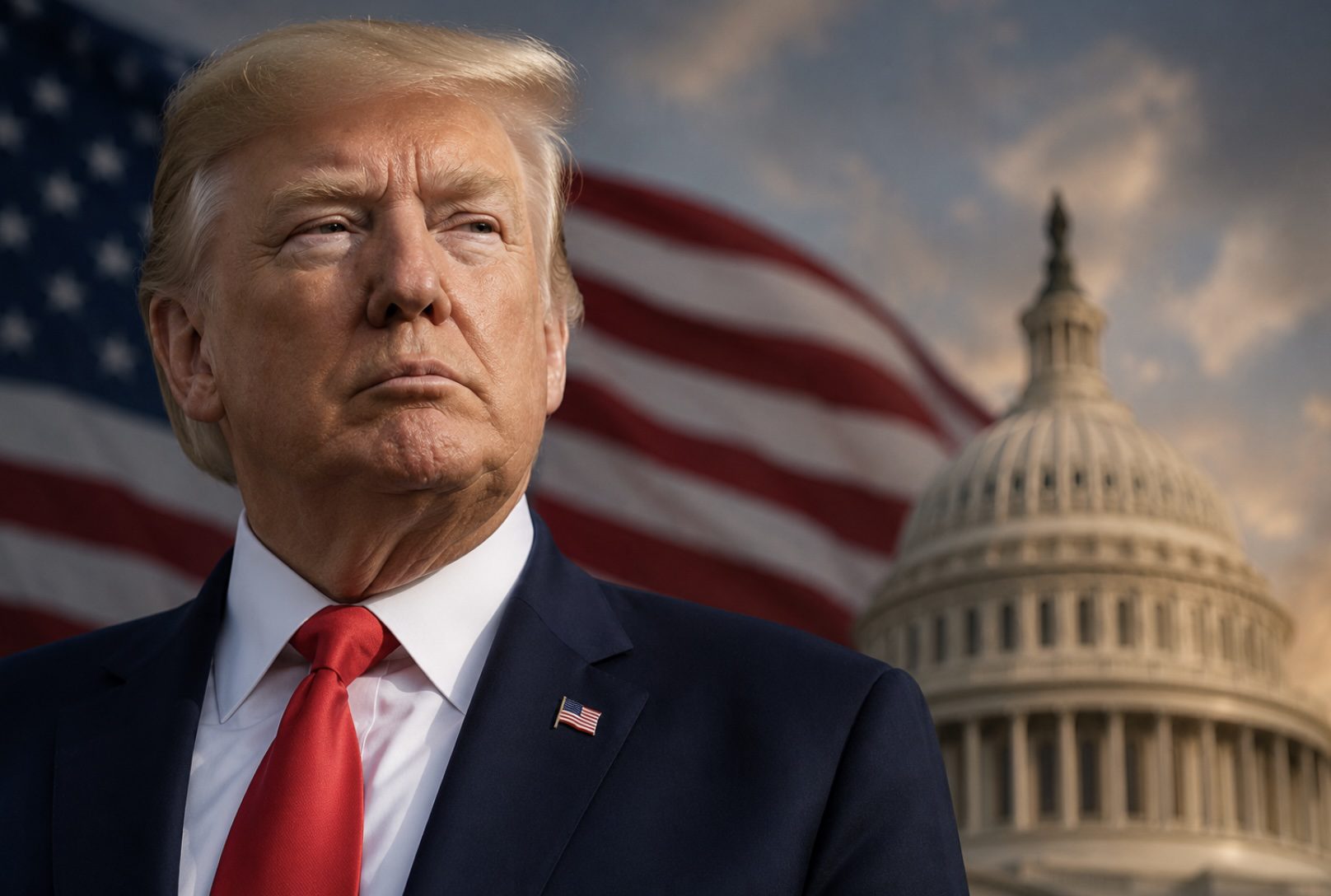
Major players in the crypto industry are raising the alarm over the risk that the Trump family's multimillion-dollar profits could definitively stall the CLARITY Act in the US Senate. After years of regulatory uncertainty, clashes with the SEC and a constant political battle in Washington, the sector seemed to have finally found an ally in the White House in Donald Trump. Trump returned to power promising to turn the United States into the world capital of cryptocurrencies and to pass the legislation the industry had been demanding for years.
The significance lies in who is publishing the article
However, something is changing. The first signs of concern no longer come from the traditional critics of cryptocurrencies, nor from Senator Elizabeth Warren, nor from the regulators who spent years trying to tighten control over the sector. The warning is coming from within the industry itself. And one of the most significant examples is a recent analysis published by The Block, one of the most influential outlets in the crypto ecosystem and, since 2023, owned by Foresight Ventures, one of the most active investment funds in the blockchain and Web3 sector.
The detail is not insignificant. The Block is part of a business ecosystem that has invested in numerous companies and projects linked to the digital economy. That is precisely why the publication of an analysis suggesting that Trump's crypto businesses could be hindering the passage of the legislation the sector has been demanding for years is especially significant.
Trump and the CLARITY Act
The criticism does not come from the sector's adversaries. The concern comes from within the industry, and the center of the discussion is the so-called CLARITY Act. This legislative bill aims to establish, for the first time, a comprehensive federal regulatory framework for digital assets in the United States.
With the CLARITY Act, Satoshi Nakamoto's technology enters Wall Street
Among other things, it seeks to define which assets should be considered securities and which digital commodities, clarify the powers of the Securities and Exchange Commission (SEC) and the Commodity Futures Trading Commission (CFTC), and impose new transparency and disclosure obligations on companies in the sector.
For the industry, CLARITY represents the possibility of obtaining the legal certainty it has demanded for years in order to attract institutional capital and develop new financial products. Trump's arrival seemed to considerably increase the chances of passage. But new obstacles have now appeared, and the problem appears to be Trump himself.
Over the past few months, the president and his family have significantly increased their presence in the sector. The launch of the TRUMP memecoin, participation in World Liberty Financial and other initiatives related to digital assets have turned the Trump family into one of the most visible economic players in the US crypto ecosystem.
$1.4 billion
The article notes that Bloomberg estimates that Trump and his family circle have generated at least $1.4 billion through cryptocurrency-related businesses since his return to the White House. These figures have fueled criticism from Democratic lawmakers who consider it a problem that the president is pushing regulation that could economically benefit projects in which he himself has interests.
The debate has now moved to the Senate, where several Democratic lawmakers argue that passage of the CLARITY Act should be accompanied by ethics provisions limiting the ability of the president, the vice president and other senior federal officials to profit economically from projects related to digital assets.
For example, Senator Angela Alsobrooks has said that an ethics agreement will be essential to secure enough bipartisan support on the Senate floor. The Democrats' position is that any legislation favorable to cryptocurrencies risks losing legitimacy if those promoting it can obtain direct financial benefit from it.
This issue threatens to become one of the main obstacles to gathering the votes needed for final passage of the bill.
The industry's awkward silence
Perhaps the most revealing aspect of The Block's article is its description of the discomfort that exists within the crypto ecosystem itself. Many industry players consider Trump to have been the most crypto-friendly political leader ever to occupy the White House.
At the same time, there is growing concern about the political cost his personal businesses are generating. Mark Hays, a policy analyst at Americans for Financial Reform, sums it up this way: They don't want to bite the hand that feeds them. According to Hays, numerous crypto advocates privately acknowledge that the president's financial interests in digital assets create public perception problems, but few are willing to criticize him openly.
The reason is obvious. Much of the industry still considers Trump its main political ally, but the discussion goes beyond the president. The underlying question is whether an industry that aspires to become a permanent part of the global financial system can afford to have its main regulatory battle tied to the economic interests of a single family.
Political consensus
Passing CLARITY requires building lasting political consensus. And the more the law is identified with Trump's personal businesses, the harder it may be for some lawmakers to support it. That is why it is so significant that this reflection appears in The Block. This is not an outside critique of the sector. It is the concern of one of the industry's most influential outlets, which is in turn owned by an investment fund deeply integrated into the blockchain ecosystem.
The article in The Block reveals how part of the industry itself is beginning to ask whether the economic interests of Donald Trump's family in cryptocurrencies could end up becoming the biggest obstacle to the regulation the sector has been waiting more than a decade for