The Fusionist bridge did not break due to a cryptographic flaw, but something simpler and outright embarrassing. The reconstruction of the Fusionist bridge incident that the company published places the origin in an internet-exposed PostgreSQL database inside a Docker container on a test server. On November 19, twelve days before the team published its report, an attacker reached it and used a newly disclosed vulnerability to execute commands with an ordinary database account. From there the chain escalated.
On November 20 he left the container for the server and planted a backdoor. Between the 21st and 22nd he seeded scripts in more than 30 code repositories that copied the deployment system's secrets and deleted themselves after running. With those credentials he entered the bridge servers on the 22nd without registering a single failed attempt, while the team slept in Singapore.
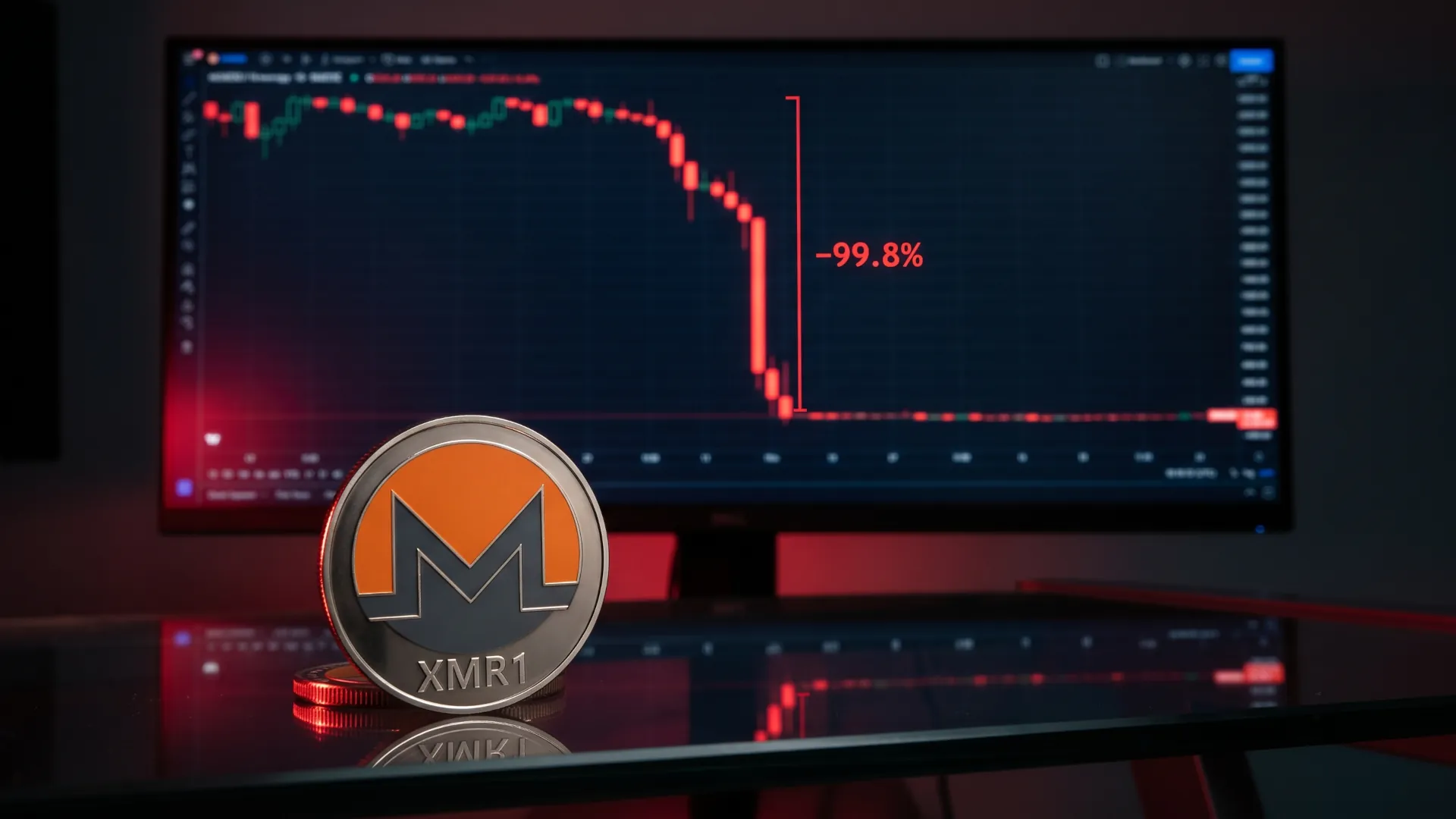
The result is visible on-chain and in the token's price. There were 59 fake mints in eleven hours, when the bridge produced about 24 a month. The first created 60 million ACE, more than all the wrapped ACE in existence. The last one arrived on Monday, generating 23 sextillion tokens. ACE traded at about 12 cents before the attack and within an hour was worth less than one millionth of a dollar.
Three locks that opened the same door
The bridge's design seemed reasonable on paper. Three different keys had to be involved in every movement: one requested the mint, another approved it and a third issued the tokens. Three keys for three locks, provided they live separately and no one holds all three at once.
The attacker had all three. The logs show that every fake mint carries the three usual signatures, in order, with no new key appearing. They are the same ones that signed more than 3,300 real mints since 2023, and the bridge had not granted or revoked a role since September 2025.
There is a detail worth emphasizing because it explains much of the incident. The three keys shared a history: Fusionist's deployment wallet funded them with a small amount of BNB in December 2023. A secrets audit would have seen that common origin in five minutes, and no one had looked.
On Monday the 23rd, at 03:12 UTC, the bridge's six wallets sent their BNB to a single address in the same second. Each transfer required its own key, so a single person held all six. The roles were revoked at 09:59, about sixteen hours after the first fake mint.
The way back that no one closed
The greater damage did not come from the mints, but from the return path. Any holder of wrapped ACE can send it back to the Endurance network, and the burn key approves the trip so that Endurance releases real ACE. That key does not distinguish a fake token from an authentic one, because both are the same wrapped ACE.
The traders understood it before the team did. They bought the crashed token for almost nothing and sent it home. In two hours, the burn key approved 42 trips from 23 wallets and released 53.7 million real ACE. Only 148 ACE of backing remained in the bridge.
To put that figure in perspective, one data point helps: in the three years before the attack, all the return trips together moved 1.13 million ACE. These two hours moved 48 times more. The asymmetry between the normal pace and the pace of the emergency is what turned an exploit into an auction.
The money trail is just as explicit. Half an hour before the first mint, a new wallet withdrew one ether from Tornado Cash and bridged it to BNB Chain to pay fees. Afterwards, the collection wallet deposited ten batches of 100 ether into the mixer in seven minutes and seven smaller ones over two days, reaching 1,154.9 ether (equivalent to 1.98 million dollars).
What it cost and what remains open
SlowMist places the combined loss at 5.7 million dollars, an estimate that covers the thieves' sales and the real ACE drained through the return path, not an audited figure. Fusionist says it is still counting and negotiating with exchanges over what can be recovered. Bithumb suspended ACE trading on the 23rd and Gate reversed some trades.
The team has deployed a new BEP-20 contract and is preparing a replacement bridge whose contracts are under audit, along with a security upgrade for the Endurance network. It has also patched the server and database vulnerabilities and rotated or revoked all the system's keys.
What it has not done is close the incident. No compensation plan has been announced, the new contracts are under review and the burn key retains its role, with no pause recorded on the bridge. The risk remains where it was: with anyone holding wrapped ACE or buying the token in hopes of redeeming it.
The account has a limit worth respecting. The chain shows which keys signed, not how they were obtained. The route through the test server comes from the timeline Fusionist shared with Bitquery, and no outside party can verify it. The Endurance side does not appear in that data either, so it is not known who received the real ACE.
The same weekend there was another bridge with a stolen key, Cyber, which lost funds the day before. Two incidents in a row with the same apparent cause are not a coincidence: they are a secrets management pattern. The next time a bridge boasts of multisig, the right question is not how many signatures it needs, but where the keys live and who has seen them together.