The countdown for Europe's digital asset industry has entered its most critical phase. According to the European Securities and Markets Authority (ESMA), any Cryptoasset Service Provider (CASP) without an official license under the MiCA framework on July 1, 2026, will automatically be operating illegally.
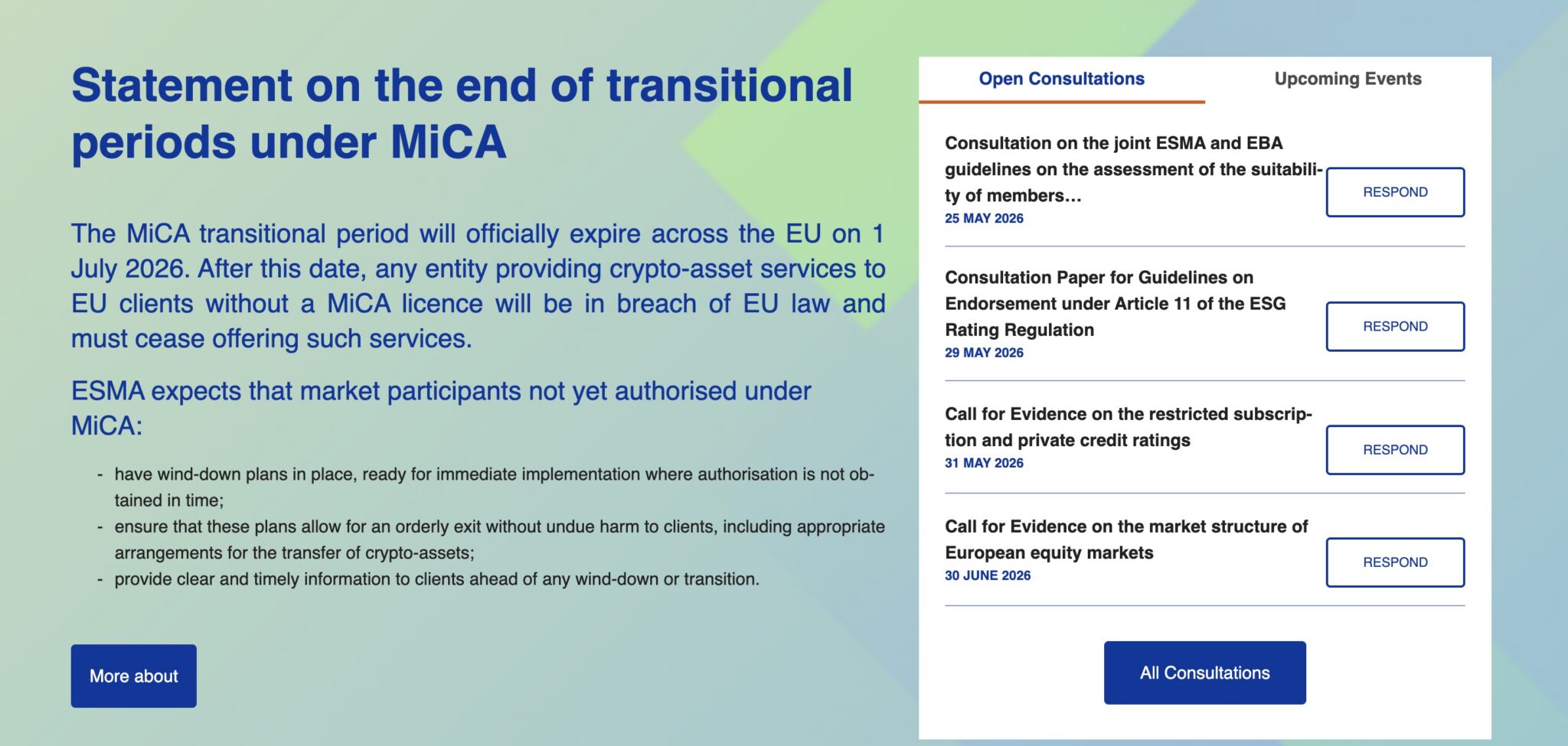
The institutional order states that lagging platforms must implement orderly wind-down plans to move and protect European clients' funds to regulated entities or self-custody wallets, avoiding an uncontrolled shutdown.
Binance, the big absentee
The cross-border supervisory map reveals an intense exchange of notifications between Spain's CNMV and regulators such as Germany's BaFin and Cyprus's CySEC. Dozens of firms have already validated their specific service codes to operate on a unified basis across the eurozone. However, a detailed analysis of these active financial passports reveals that Binance, the world's largest exchange, still does not appear in the network of operational cross-border notifications recorded in the regulators' control archive. Binance faces an extreme sprint to avoid being shut out of the EU market.
Despite its absence from the eurozone's active passports, the crypto giant unveiled its strategy to save its European market last February. Binance has submitted a formal MiCA authorization application to Greece's Hellenic Capital Market Commission (HCMC) through a newly created subsidiary called Binary Greece.
Its goal is to centralize its regulatory base in Athens and from there activate the financial passport to the rest of the EU countries before the transitional regime expires. However, the Greek authorities have not yet issued final approval. This leaves the platform in a theoretically vulnerable position given ESMA's wind-down requirements if Athens regulators do not approve the file before July 1, 2026.
Market closures and 5% fines for laggards
The warning from ESMA leaves no room for "last-minute" applications without consequences. If an unregulated platform stretches the deadlines and continues operating in EU territory from July, a severe penalty regime will be triggered. Fines can range from a minimum of 5 million euros up to 5% of the company's annual global turnover.
With 41 days until the ESMA deadline expires, the countdown has begun. While dozens of CASPs have already secured their position in the cross-checked internal registries of the continent's financial powers, the giant Binance is counting on the Greek regulatory route being resolved before the axe of European law falls definitively on the sector.
The control database of financial passports under the MiCA framework now includes a total of 201 cryptoasset service providers (CASPs) registered to operate cross-border in the eurozone. One of the latest additions to the official list is KBC Bank NV, which was added on May 13, 2026. The Belgian bank announced in February that it would buy and sell cryptoassets from its online investment platform.
The fact that MiCA's financial passport list has already reached 201 registrations is definitive proof that cryptoassets are no longer a game for a few and have become a mature institutional market. The best example of this shift is traditional banking: BBVA, Cecabank, Openbank, Renta 4 Banco, CaixaBank and Kutxabank are the six Spanish entities that already hold MiCA authorization to operate with digital assets.