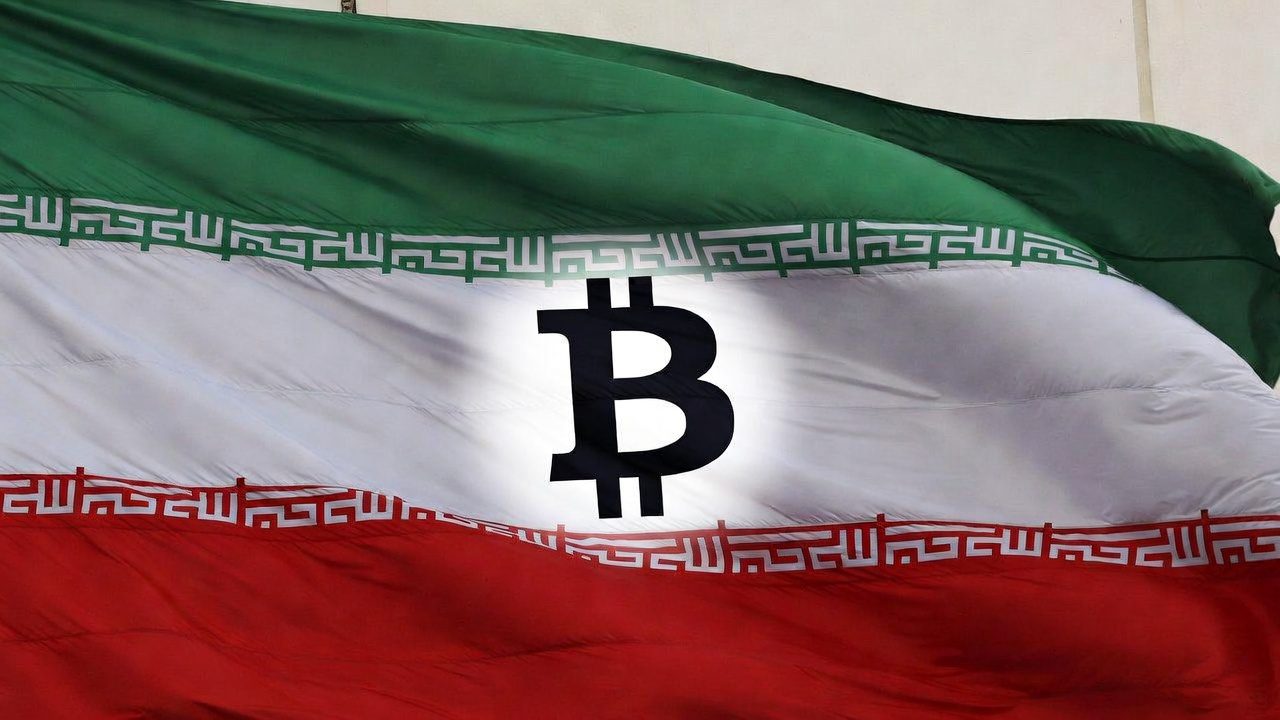
Military attacks on Iran show how, for many Iranians, bitcoin has become one of the few survival tools in the face of the collapse of the rial and the war. While the United States and Israel carried out air operations over Iranian territory, the country's digital system activated an invisible but large-scale emergency protocol.
On-chain data shows that in the hours after the detonations, outflows of assets from the main local cryptocurrency exchanges soared 873%, reaching approximately 10.3 million dollars in just two days. Without a doubt, a sign of the financial self-preservation instinct in an economy suffocated by war, sanctions and inflation.
Bitcoin in Iran
According to the blockchain analytics firm Chainalysis, the activity recorded between February 28 and March 2 follows a historical pattern the company describes as a financial pressure valve. This behavior had already been observed during the Kerman attacks and in other episodes of regional tension in 2024.
For many people in cities such as Tehran or Isfahan, moving funds into self-custody wallets has become a last line of defense against a rial in free fall and a banking system tremendously vulnerable to international sanctions. With access to foreign currency heavily restricted and the risk of financial controls ever-present, cryptocurrencies are demonstrating a degree of portability and economic sovereignty that no physical institution is currently in a position to guarantee.
However, analysis of these capital flows reveals a much more complex reality. Behind the 10.3 million dollars moved are citizens seeking to protect their family savings amid uncertainty, cryptocurrency platforms redistributing their liquidity into new wallets to reduce their exposure to sanctions, and state-linked actors using these same channels to sustain cross-border trade at moments of maximum volatility.
Strength in times of crisis
This convergence of interests has turned Iran's crypto infrastructure, valued at around 7.8 billion dollars, into a kind of parallel financial circulatory system. A system capable of keeping part of the economic activity running even when traditional channels are blocked.
The experience of the recent internet blackouts imposed by the authorities has also taught users to anticipate events. The data indicates that withdrawal volumes began to rise steadily long before the first missiles fell, suggesting that part of the population already anticipated a possible escalation and sought refuge in Bitcoin while the digital connection was still stable.
This capacity for reaction among the population shows the extent to which blockchain technology has ceased to be a mere technological curiosity in Iran and has become part of the daily strategies of a society accustomed to operating under constant economic and geopolitical pressure.
A new phase of maturity
BTC's behavior suggests a new phase of maturity, which some analysts describe as the return of the war premium. Unlike previous episodes, the market's reaction has been much faster. Although the price fell around 8% after news of the Iranian leader's death on Saturday, Bitcoin recovered nearly 9% the following Monday, even surpassing pre-attack levels.
At the same time, the asset has shown a certain decoupling from gold. While the precious metal has experienced stretches of volatility or stagnation during this conflict, Bitcoin is heading toward 72,000 dollars at the close of this edition, suggesting that some capital is beginning to treat it as a fast-liquidity haven. It is not the first time bitcoin has weathered a conflict, but it does appear to be one of the first times the market is starting to see it more as a solution than as a problem.