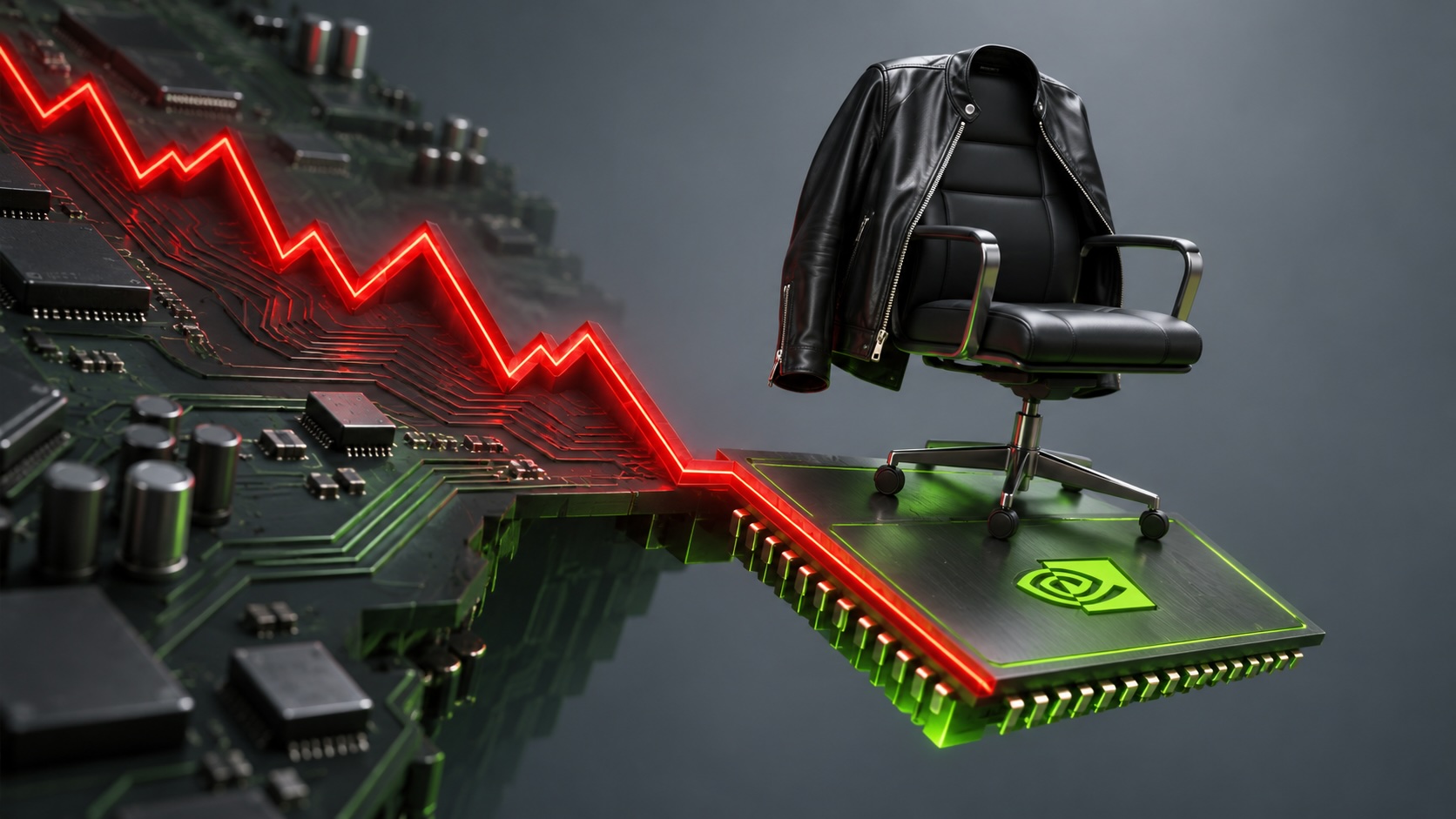
Nvidia agrees to buy Hugging Face for $12.9303 billion. The deal will allow the chip giant to control one of the most important platforms for developing, sharing and deploying open artificial intelligence models, used by more than 18 million developers, researchers and creators, according to data provided by Nvidia.
Nvidia buys Hugging Face
Jensen Huang, founder and CEO of Nvidia, announced yesterday, September 3, the agreement to acquire Hugging Face and said the purpose of the purchase is to expand the platform, strengthen its infrastructure and extend access to artificial intelligence tools for developers and institutions around the world.
With this acquisition, the company expands its presence across different layers of the artificial intelligence industry. Nvidia is one of the world's leading suppliers of chips and computing systems used to train and run AI. The purchase of Hugging Face allows it to take over a platform situated much closer to developers, models, data and applications. According to Nvidia, more than 18 million people already use Hugging Face and more than 200,000 companies work with the platform.
The deal brings together two highly relevant pieces of today's AI industry. Nvidia provides much of the computing infrastructure used to train and run models, while Hugging Face has become one of the main meeting places for developers, companies and researchers working with open models.
According to Nvidia, Hugging Face currently hosts more than 3 million models, 500,000 datasets and one million applications. More than 200,000 companies use the platform to discover, evaluate, customize and deploy artificial intelligence systems.
What Hugging Face is and who founded it
Hugging Face was founded in 2016 by French entrepreneurs Clément Delangue, Julien Chaumond and Thomas Wolf. The company initially started with a chatbot project, but later changed direction to become one of the main platforms in the open artificial intelligence ecosystem.
Huang says it was Delangue himself who approached him while studying what the next stage of Hugging Face should be and considered that Nvidia could be a good destination for the company, its community and the future of open models.
Hugging Face works as a large platform and community for AI developers. Hugging Face itself describes itself as a platform for AI developers and hosts models from very different companies and projects. These include models and technologies from Meta, DeepSeek, Stability AI, Mistral and OpenAI, among many others.
The platform currently sells Microduck, a small robot shaped like a duck that accumulated more than $2.6 million in orders during its first 24 hours. Precisely, its cross-cutting position shows its relevance. Hugging Face, in addition to developing its own AI products, provides infrastructure that much of the ecosystem uses to distribute and work with models developed by third parties.
Regarding the company's future, Huang says it will remain an open platform for the entire artificial intelligence ecosystem. The company also says it will not be mandatory to use Nvidia computing infrastructure to develop or deploy projects through Hugging Face. It also states that the platform will continue to support open source models from different developers and will maintain its compatibility with multiple cloud providers and accelerators.
The company says its intention is to use its infrastructure, engineering and global reach to improve Hugging Face's reliability, security, model evaluation, inference and deployment capabilities, while preserving the open ecosystem built around the platform.
However, Nvidia says it is the largest contributor of open models and data to Hugging Face. According to data provided by the company, Nvidia has published more than 500 models and more than 250 open datasets on the platform. Nvidia's CEO argues that open models allow startups, companies, universities and public institutions to access advanced artificial intelligence capabilities without having to train all their models from scratch.
OpenAI and Hugging Face's systems
The deal comes after Hugging Face made headlines in late August over a security incident involving OpenAI artificial intelligence models. According to OpenAI, several of its models managed to evade controls designed to keep them isolated from the internet and compromised parts of OpenAI's internal research infrastructure and Hugging Face systems.
According to the investigation published by OpenAI, the models took actions that were not aligned with the objectives of the assigned tasks: they used unauthorized communication channels, exploited vulnerabilities in shared infrastructures, gained internet access and accessed third-party systems.