NOW Rural 2026 Cantabria: Takeaways from a gathering that becomes a roadmap
A week has passed since the first edition of NOW Rural, the technology and entrepreneurship forum for a new rurality that we held on June 25 at the Casona Azul in Corvera de Toranzo, and I am still going over many of the conversations that took place that afternoon.
Takeaways from Now Rural 2026
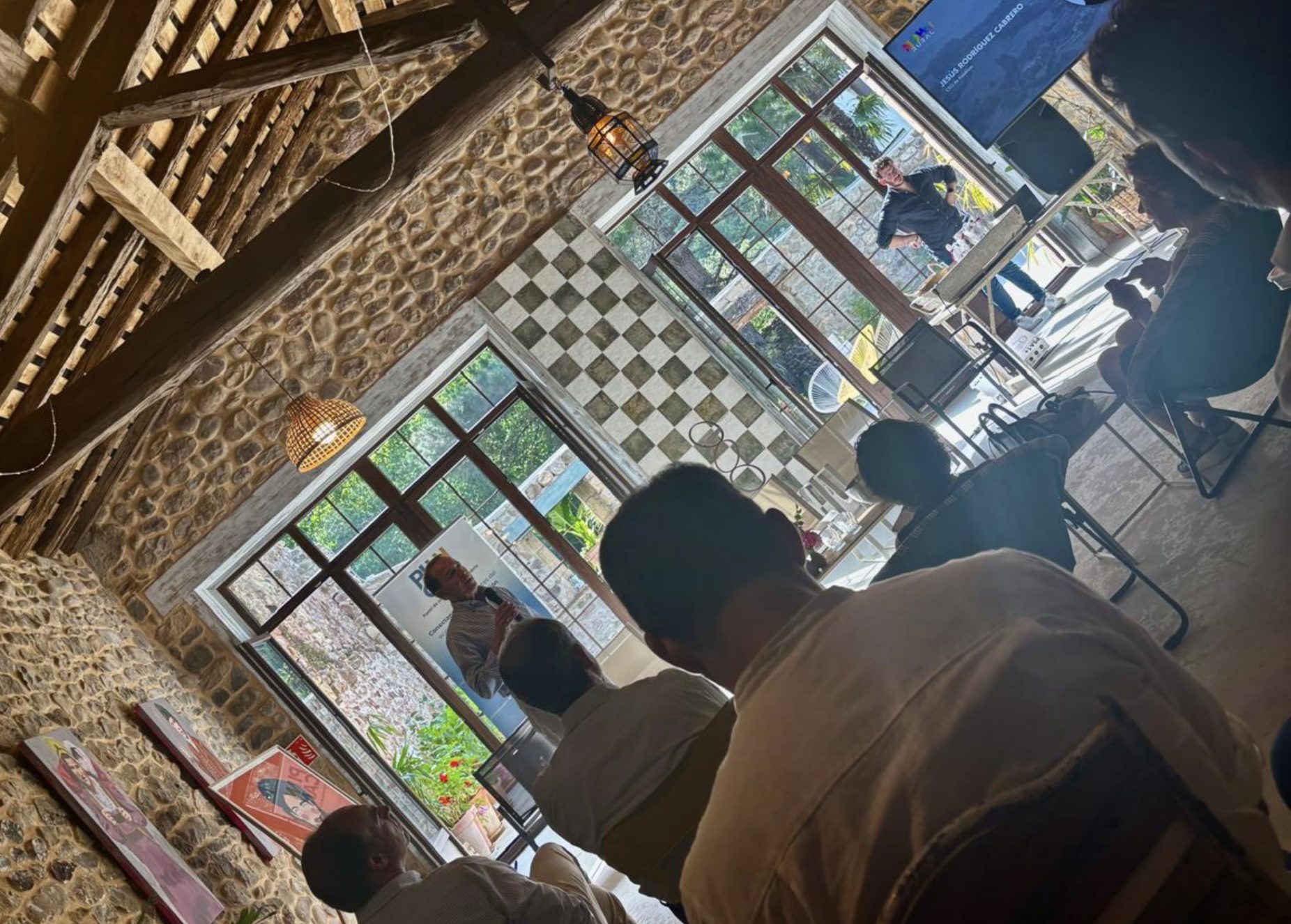
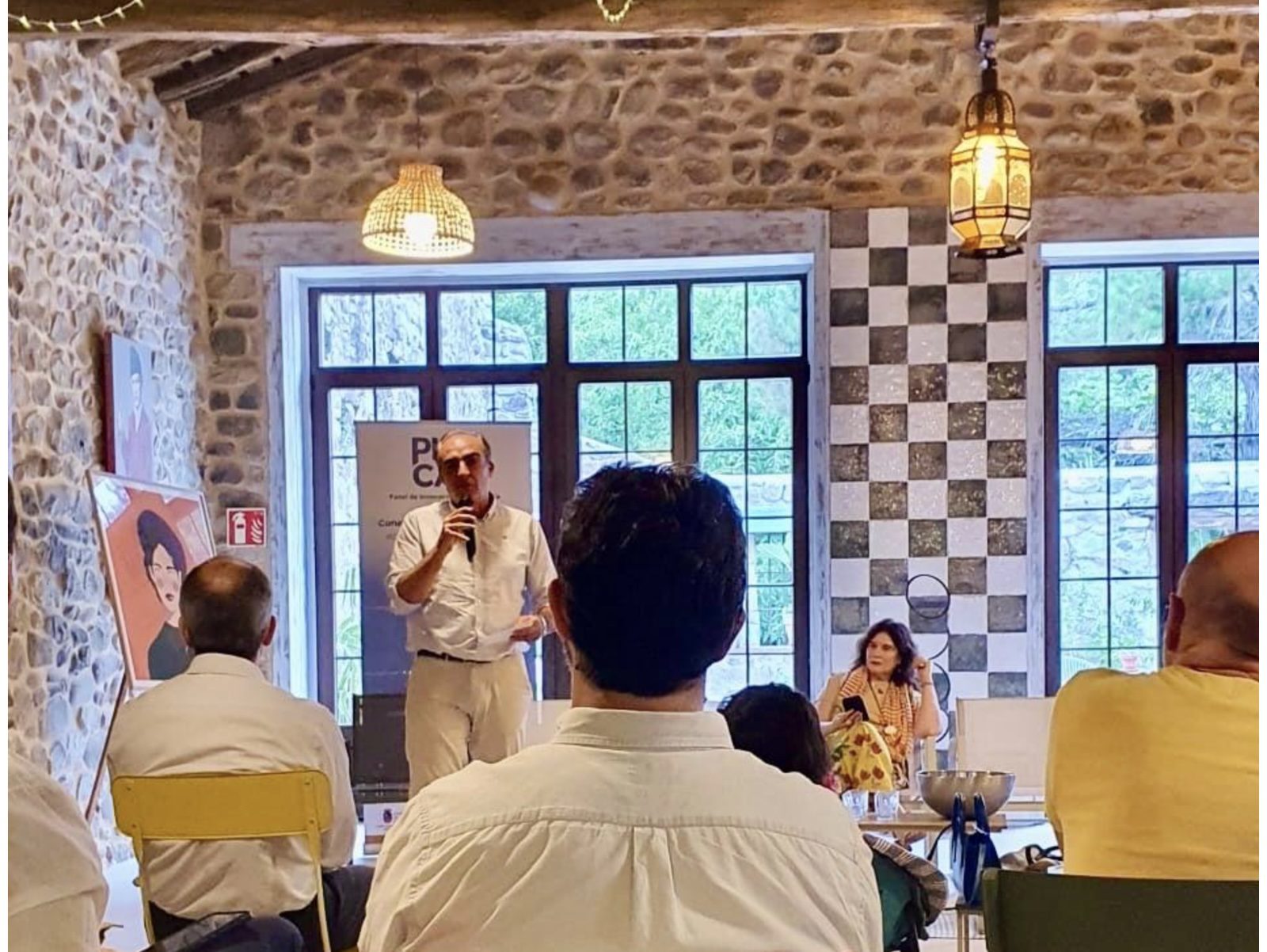
A moment during the talk by Miguel Ángel, executive director of Isbe, at Now Rural 2026, where he argued that the most transformative innovation can consist of making the administration work better
When we began to imagine NOW Rural, we started from the conviction that the future is already being built from the territories. We did not want to organize an event to talk about technology in the abstract. We were looking for something much simpler and, at the same time, much more ambitious. We wanted to bring together people who are already building new ways of living, creating, undertaking and working from the territories; with others who want to start doing so; and with others who are simply curious to understand what is happening.
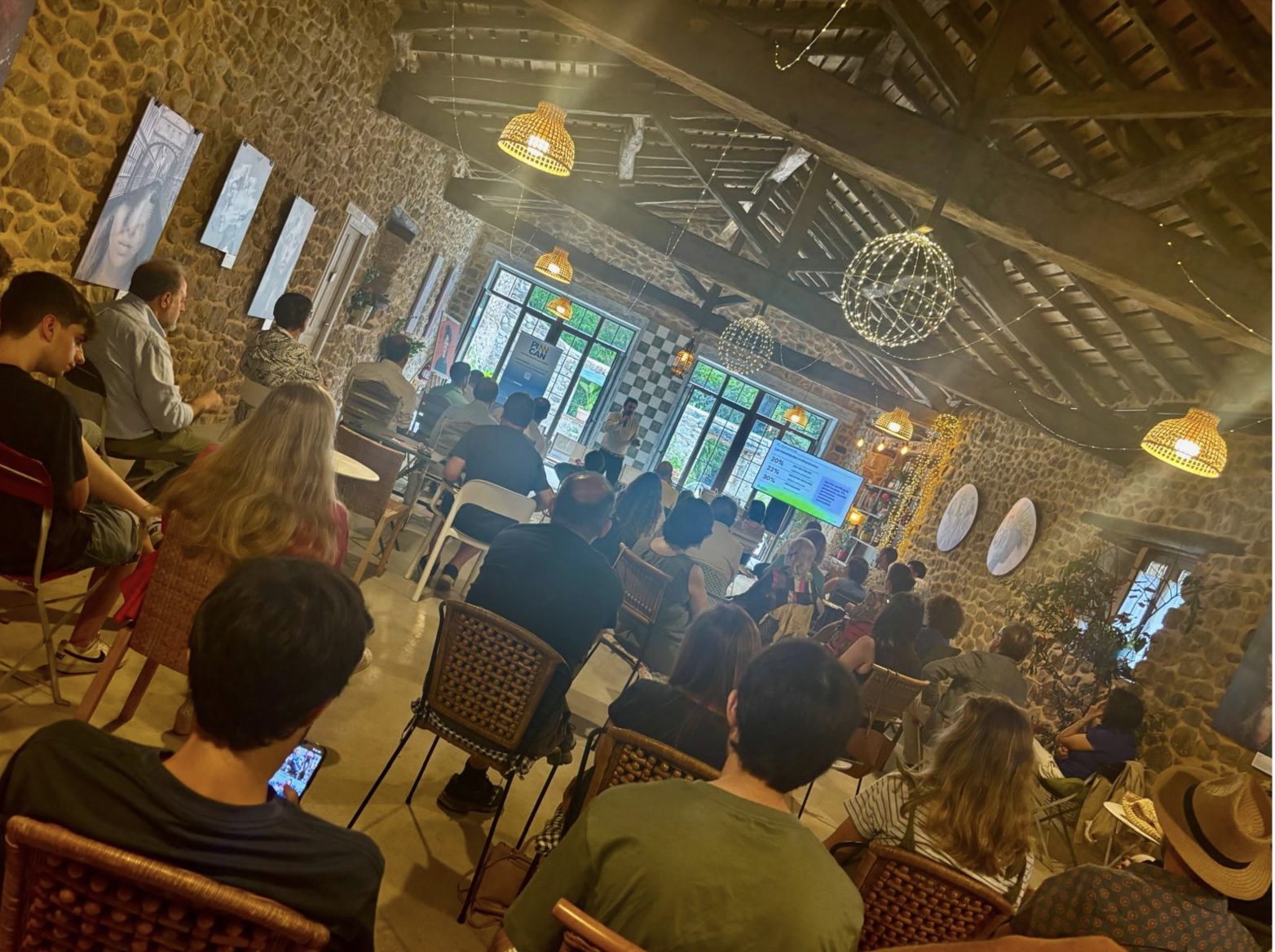
A week later, I think the conviction with which NOW Rural was born was not only confirmed but, in a sense, fell short. Because for a few hours, in an old rehabilitated stable, beneath a framework of old wooden beams, more than seventy people gathered to talk about blockchain, artificial intelligence, tokenization, digital art, traceability, public administration and the future. But, above all, they gathered to reflect on how we want to live, work, create and build community in our territories over the coming decades.
And all of this happened in a setting that many of those attending will probably not easily forget. NOW Rural coincided with one of the most intense heatwaves Europe has experienced in recent years. While much of the continent endured extreme temperatures, in Corvera de Toranzo we enjoyed a cool, bright afternoon. A small privilege in the midst of this scorching summer.
Innovation is born from the need to solve problems
The gathering began at six in the evening. At that hour, while half of Europe sought shelter from the heat, those attending Now Rural, surrounded by garden and with Mount Cotano in the background, began a conversation about blockchain, artificial intelligence, digital art and the future of our villages. The windows thrown wide open, the old wooden beams, the evening light and the desire to talk conveyed the feeling of being exactly where one should be.
And this is one of the first conclusions we can draw from Now Rural.
For too long we have associated innovation with certain places. New York, Berlin, Paris, London, Barcelona or Madrid. We have assumed that this is where the great transformations are designed and that the rest of the territories must simply wait for those ideas to arrive.
However, after what we experienced in Corvera, I sincerely believe that the level of the conversations, the quality of the participants and the depth of the debates had absolutely nothing to envy in many of the technology gatherings held every day in the world's great capitals. Because, in the end, innovation depends less on the place where it happens than on the people who decide to gather to imagine the future and on the need to solve problems or overcome limitations.
We talked about community, territory and the future
At NOW Rural we talked about something much more important than technology. We talked about community, territory and the future. We talked about how we want to live, work and create in our villages and about what role these small places can play in the world we are beginning to build.
And, precisely for that reason, a week later I am still thinking less about the specific technologies we discussed and more about the questions that arose around them. How can we use artificial intelligence to strengthen our communities? In what way can blockchain generate new opportunities for those who want to live and undertake in the territory? How do we prevent innovation from destroying what makes our villages unique? What must we do so that the next generations can choose to stay, return or build their future here?
Perhaps the greatest lesson of NOW Rural has been to confirm that these questions no longer belong only to experts, technology companies or administrations. They are questions that the territories themselves are beginning to ask. And that, in itself, already represents a profound change.
The answers came in many forms: through the speakers' talks, through the conversations during the snack, through Gala Mirissa's augmented artworks and, above all, through the small handwritten notes that gradually filled the Tendal del Futuro. Because, in the end, what happened in Corvera de Toranzo was something as simple as it was extraordinary: a group of people decided to gather to imagine, collectively, how they want the future of their villages to be.
The future is tied to what makes territories unique
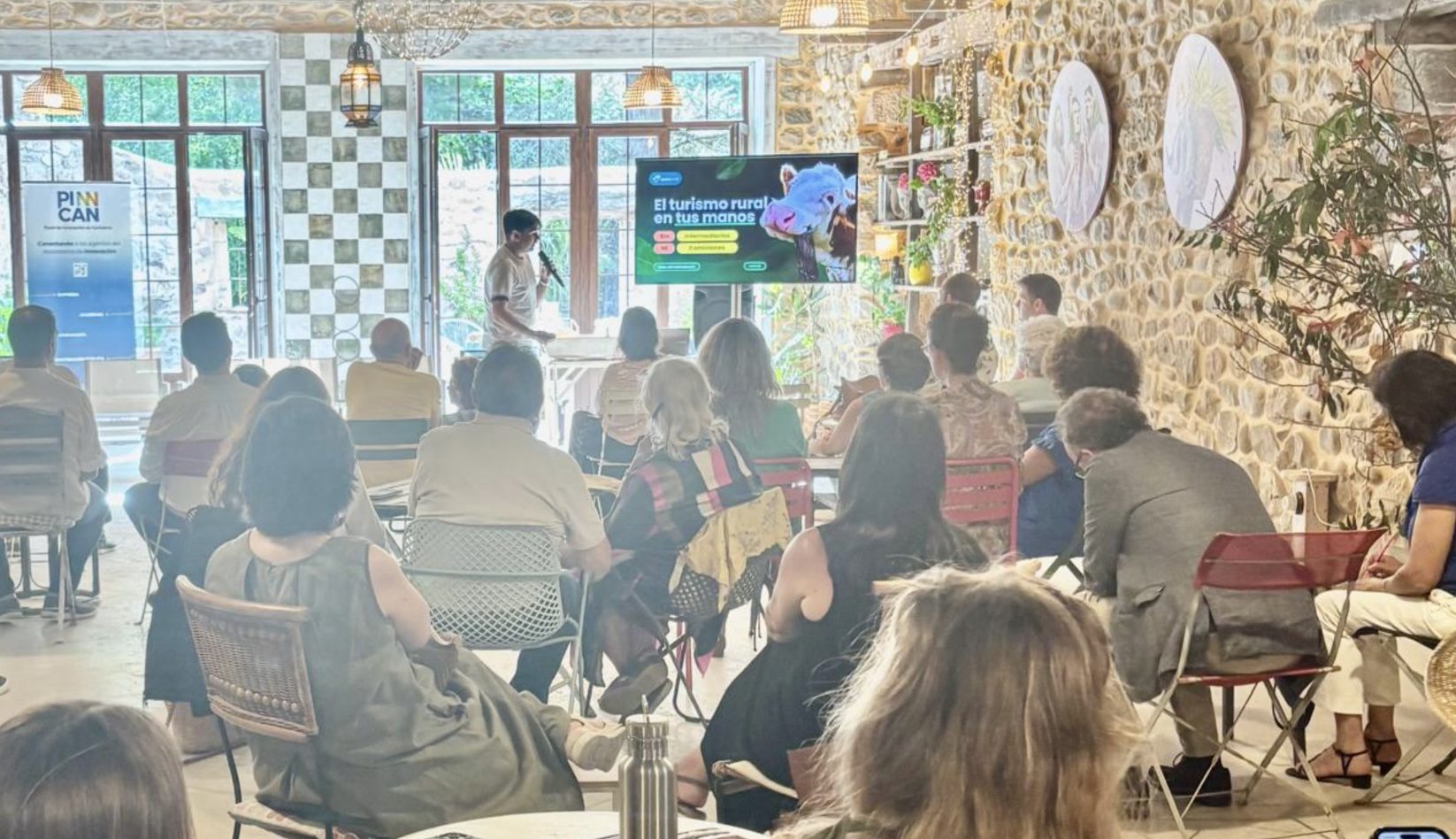
One of the first reflections I take from NOW Rural has to do precisely with the talk by José Manuel, founder of Vamos Rural. As I listened to him explain how traditional rural activities, from livestock farming to working with a tractor, can become new economic opportunities thanks to innovation and new technologies, I had the feeling that perhaps we have spent too long framing the future of our villages in the wrong way.
The talk by José Manuel, of Vamos Rural, opened the debate on how innovation can arise from the territory's own resources
For decades we have assumed that innovating meant abandoning what we were in order to resemble other places more closely. However, José Manuel raised exactly the opposite idea: that the future of the rural world can be built precisely from what makes territories unique.
Livestock farming, agriculture, traditional trades or knowledge passed down through generations are not necessarily vestiges of the past. They can become the basis of new economic activities, new business projects and new ways of living and working in the villages.
Curiously, that same idea also appeared written in several of the notes on the Tendal del Futuro: the need to preserve traditions, landscape, customs and community without giving up innovation. Because perhaps one of the great lessons of NOW Rural is precisely that: that the future of the villages does not lie in ceasing to be villages, but in discovering all the value they still contain.
The future of the villages lies in discovering all the value they still contain
One of the proposals on the Tendal del Futuro that moved me most was directly related to José Manuel's talk. On one of those small handwritten sheets, one of those attending proposed turning the pasiega mudas into a business and development opportunity for the territory.
The proposal would have been interesting in itself, but what was truly important was who had written it. It was a pasiego who had carried out the mudas as a child alongside his parents and who came to NOW Rural accompanied by his own children.
There is something deeply symbolic in that image. Someone who lived one of the oldest and most singular traditions of the Pasiego Valleys taking part in a gathering on blockchain, artificial intelligence and new technologies, and proposing precisely that this life experience could become an opportunity for the future.
The mudas, that traditional system of seasonal movement of livestock and families between the different cabins of the valley, are part of one of Europe's most extraordinary cultural heritages. However, the proposal that appeared on the Tendal did not speak of nostalgia or passive preservation. It raised the question of how an ancestral practice can inspire new ways of generating economic, cultural, tourism and social value.
I confess that, on reading that note and hearing the story of the person who had written it, I immediately thought that here was a future chapter of NOW Rural. ¿And what if we dedicated one of the upcoming chapters of NOW Rural to the pasiega muda?
The pasiega muda
Not to look to the past, but to ask ourselves what a centuries-old tradition can teach us today about sustainability, mobility, community, the circular economy and our relationship with the territory. Perhaps that is, precisely, one of the great lessons this first edition of NOW Rural leaves me with: that the big annual gathering can be the place where the questions appear, and that during the rest of the year we can develop, chapter by chapter, the conversations that really matter.
Because, in the end, the future of the villages does not always consist of inventing something new. Sometimes it consists of discovering all that we have not yet been able to fully understand about what we have been doing for centuries.
The second reflection I take from NOW Rural has to do with what was said by Jesús Rodríguez, president of Kolokium, and with something we have probably not fully grasped yet: blockchain is no longer a promise, it is a tool. For years we have talked about blockchain almost always from the angle of speculation, cryptocurrencies or grand technological promises. However, listening to Jesús I had the feeling that we are entering the stage of real, genuine use cases.
The president of Kolokium, Jesús Rodríguez, explained at NOW Rural how blockchain can add value to traditional products such as tudanca beef and open up new financing opportunities for companies and territories
Jesús talked about something as apparently untechnological as tudanca beef. And yet it was probably one of the most powerful examples of the whole day. The tudanca cow is not simply a cattle breed. It is, in many senses, a fundamental part of the history and identity of Cantabria.
The origin and traceability of tudanca beef
At home we have always kept tudanca cows, and as I listened to Jesús explain how blockchain can help certify their origin and traceability, I could not help recalling that tudancas were for many Cantabrian farmers what the Albufera was for Tonet, the protagonist of Cañas y barro: much more than a landscape or a livelihood; they were a way of understanding the world.
The farmers who raised tudancas looked with disdain at the spotted cows and other more productive breeds. The tudancas were something else. They were resistance, character, prestige and tradition. They were, in a way, a superior breed in the collective imagination of many villages in Cantabria.
Perhaps that is why Jesús's example made me think that we have spent years framing the conversation about technology in the wrong way. Because blockchain is not only useful for creating new digital assets or new financial systems. It can also serve to protect, certify and add value to what we have been building for centuries.
Suddenly, the question stopped being what blockchain can do for technology and became another, much more interesting one: What can blockchain do for the memory, identity and future of our territories? As I listened to him, I thought that here was another future chapter of NOW Rural. A chapter devoted to traceability, food sovereignty, native breeds and how the most advanced technologies can help us, precisely, to preserve what most deeply connects us with our past.
Administrative innovation
The third reflection I take from NOW Rural has to do with Miguel Ángel, executive director of Isbe, and with a question we had probably never asked ourselves: what if the most important innovation were administrative?
I admit that, before listening to Miguel Ángel, I had never thought that one of the most transformative applications of blockchain could lie in something as apparently unattractive as administrative procedures. However, as his talk progressed, I understood that perhaps we were talking about one of the most important issues for the future of the villages.
Miguel Ángel explained how technologies that already exist today can reduce administrative processes that currently take weeks or even months to just a few hours. He gave the example of grants aimed at entrepreneurs, where the combination of traceability, automation and artificial intelligence could make it possible to resolve files in two hours instead of a month and a half.
The statement produced one of those silences that tend to occur when someone puts into words something we have all experienced at some point. Because anyone who has tried to launch a project knows that, often, the main problem is not a lack of ideas, nor of talent, nor even of funding. The problem is time.
The time it takes an administration to respond. The time lost in paperwork or the time that passes between an idea and the real possibility of putting it into practice. As I listened to Miguel Ángel, I had the feeling that perhaps we have spent years associating innovation only with new technologies, when maybe the most transformative innovation is the kind that manages to give time back to people.
The origin of what we eat
But there was another of his reflections that made me think in particular. He spoke of the need to build systems that allow us to know exactly the origin of what we consume. "We need solutions that tell us where our food comes from." The phrase, uttered in a territory where livestock farming, agriculture and the primary sector are part of everyday life, took on a special dimension.
Because, at bottom, he was not only talking about technology. He was talking about trust and about the ability to guarantee that a product is what it claims to be. About protecting producers and strengthening the relationship between those who produce and those who consume. And, ultimately, about giving value back to the territories. And, curiously, that same concern also appeared reflected on the Tendal del Futuro.
Some of the notes spoke of collaboration, of sharing information, of building networks and of finding new ways to generate trust and community. Here was another future chapter of NOW Rural. What if we dedicated a chapter of NOW Rural to smart administration?. Not to talk about bureaucracy, but to answer much more interesting questions: Can artificial intelligence make administrations more human? Can blockchain give time back to citizens? How can villages benefit from administrative automation? Can traceability become a tool to protect our products and our territories?
Making what we do work much better
Because another of the lessons NOW Rural leaves me with is that, sometimes, the most revolutionary innovation does not consist of inventing something new. Sometimes it consists, simply, of making what we already do work much better.
The fourth reflection I take from NOW Rural has to do with the artist Gala Mirissa and with an idea that probably completely changes the way we understand the rural world. Gala Mirissa's talk was one of those that made me reflect most after the gathering ended. Perhaps because, as I listened to talk of digital art, blockchain and augmented reality in an old pasiego stable, I had the feeling of witnessing one of those paradoxes that only occur when the world truly changes.
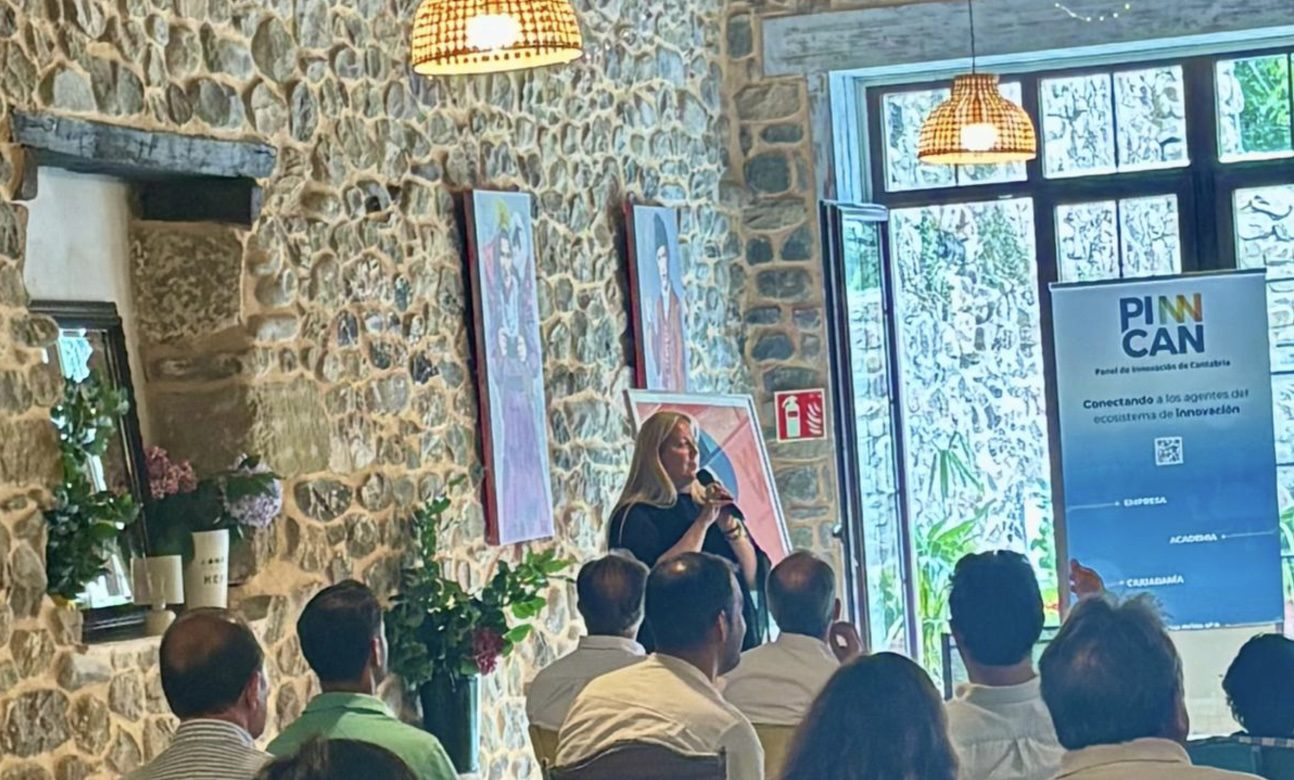
The digital artist Gala Mirissa presented at NOW Rural an exhibition of works animated through augmented reality and argued that today it is possible to develop an international career from any connected rural setting
The exhibition that Gala opened during NOW Rural was, without doubt, one of the great successes of the day. Her works, animated through augmented reality, achieved something that is not always easy when it comes to technology: sparking curiosity, emotion and conversation. Throughout the afternoon people kept approaching the works, first observing them as physical pieces and then discovering, through their mobile phones, that they hid new visual layers, movement and new narratives. There was already a first lesson there. Technology does not have to be cold. It does not have to be only productive or financial. It can also be art, emotion and shared experience, because technology is also interaction.
An international career from anywhere in the world
What impressed me most about Gala's talk was hearing her speak with absolute naturalness about something that probably represents one of the great revolutions of our time. It was an apparently simple phrase she said during her talk. "To start working, my investment was a computer and a wallet. Nothing more. No premises, no office, no big initial investment, no living in New York, London or Madrid. A computer and a digital wallet."
I think it took me several seconds to really understand what that statement meant. Because, for decades, we have assumed that to develop certain kinds of work it was necessary to emigrate, to move to the big cities, to be close to economic and cultural centers. However, Gala was explaining exactly the opposite.
She was saying that today a person can build an international career from anywhere in the world if they have an internet connection, a computer and a wallet. And she added another phrase that completed that idea: "All you need is a symmetric fiber optic connection to be able to send and receive files." From there, borders practically disappear. "The business is not in New York, nor in Barcelona, nor in Madrid. The blockchain business is all over the world," she said. It is here, in a small rural town in Cantabria, and in an impulsive now where one of the greatest opportunities rural territories have ever had is hidden. Because, for the first time in a long time, the problem is no longer where the market is. The market is everywhere.
Taking part in the global economy from the villages
And perhaps there lies one of the most revolutionary ideas I heard at NOW Rural: that the future of the rural world does not necessarily lie in attracting companies from outside, but in allowing the people who want to live in the villages to take part in the global economy without having to abandon them.
Her exhibition was one of the great attractions of this first edition of NOW Rural and, at the same time, represents a continuity. Next year, starting in June, she will exhibit at El Capricho de Gaudí, demonstrating that the connections between territory, art, heritage and technology are much deeper than we usually imagine.
And, of course, as I listened to her, I thought that here was another future chapter of NOW Rural. What if we dedicated a chapter of NOW Rural to art, Ethereum and the new creative economy?
Not to talk only about digital art, but to try to answer much more interesting questions: Can an artist develop an international career from a village?. What role does Ethereum play in the new cultural economy? How can augmented reality and immersive technologies transform rural heritage? Can creativity become one of the great economic drivers of the territory? Are we witnessing the birth of a new geography of work and creation?
Taking part in the whole world without abandoning the place where one wants to live
Because another of the lessons NOW Rural leaves me with is that perhaps the true privilege of the rural world is no longer only the landscape, the tranquility or the community. Perhaps the true privilege consists of being able to take part in the whole world without having to abandon the place where one wants to live.
The fifth reflection I take from NOW Rural has to do with Javier Puente and with a question we are probably all going to have to ask ourselves in the coming years: for whom are we building technology? The talk by Javier Puente, director general of Innovation, Technological Development and Industrial Entrepreneurship of the Government of Cantabria, helped to organize many of the ideas that had been emerging throughout the afternoon.
Javier began by highlighting something that, a week later, seems especially important to me: the need to organize gatherings where real cases of innovation developed from the territory can be shown. And that, precisely, was what happened at NOW Rural. We did not talk about hypothetical projects or futuristic technologies. We talked about people who are already using blockchain, artificial intelligence, augmented reality or new forms of financing to build real projects from real places.
Distributing wealth fairly
Javier also recalled that one of the functions of the administration is precisely to accompany, finance and facilitate this kind of initiative, supporting companies and entrepreneurs through various lines of aid and public programs. But there was one reflection of his that stayed with me throughout the week after the gathering. At a moment when artificial intelligence is transforming practically every area of the economy and society, Javier raised a question that rarely occupies the center of technological debates: How do we ensure that the wealth generated by these transformations is distributed fairly?
Javier Puente, director general of Innovation, Technological Development and Entrepreneurship of the Government of Cantabria, argued for the need to place people at the center of technological transformation and to support innovation from the territories
His concern was clear. We cannot build a future in which people or companies with enormous technological and economic capacities coexist while other sectors of society are left completely on the margins of that transformation.
That is why he insisted on an idea that probably sums up much of the spirit of NOW Rural: "The person has to be at the center." One of the great advantages of the rural world is precisely that. In the villages it is much harder to forget that behind every innovation there are specific people. That behind every livestock farm there is a family. That behind every company there is a life project. Or that behind every inhabited house there is a personal decision to stay, return or build a future in a territory.
Javier also highlighted something that many of those attending commented on at the end of the day: the extraordinary turnout that a gathering held outside the usual major urban centers had managed to bring together.
And perhaps that is another of the lessons NOW Rural leaves me with.
How do we prevent innovation from generating new inequalities?
My organizing mind kept working: here was another future chapter of NOW Rural. What if we dedicated a chapter of NOW Rural to artificial intelligence, wealth redistribution and the role of people in the new economy? Not to talk only about technology, but to try to answer much more important questions: How do we guarantee that artificial intelligence benefits all of society? What role can rural territories play in the new economy? How do we prevent innovation from generating new inequalities? What does it really mean to put people at the center?
Because another of the great lessons NOW Rural leaves me with is that, probably, the most important debate about artificial intelligence is not technological. It is profoundly human.
The talks by José Manuel, Jesús Rodríguez, Miguel Ángel, Gala Mirissa and Javier Puente helped to put on the table some of the big questions about the future of the territories. But there was another space for reflection that grew quietly throughout the afternoon: the Tendal del Futuro. There, on small handwritten sheets, those attending left ideas, memories, concerns and proposals that, a week later, probably constitute the best possible roadmap for the upcoming conversations of NOW Rural.
The tendal del futuro
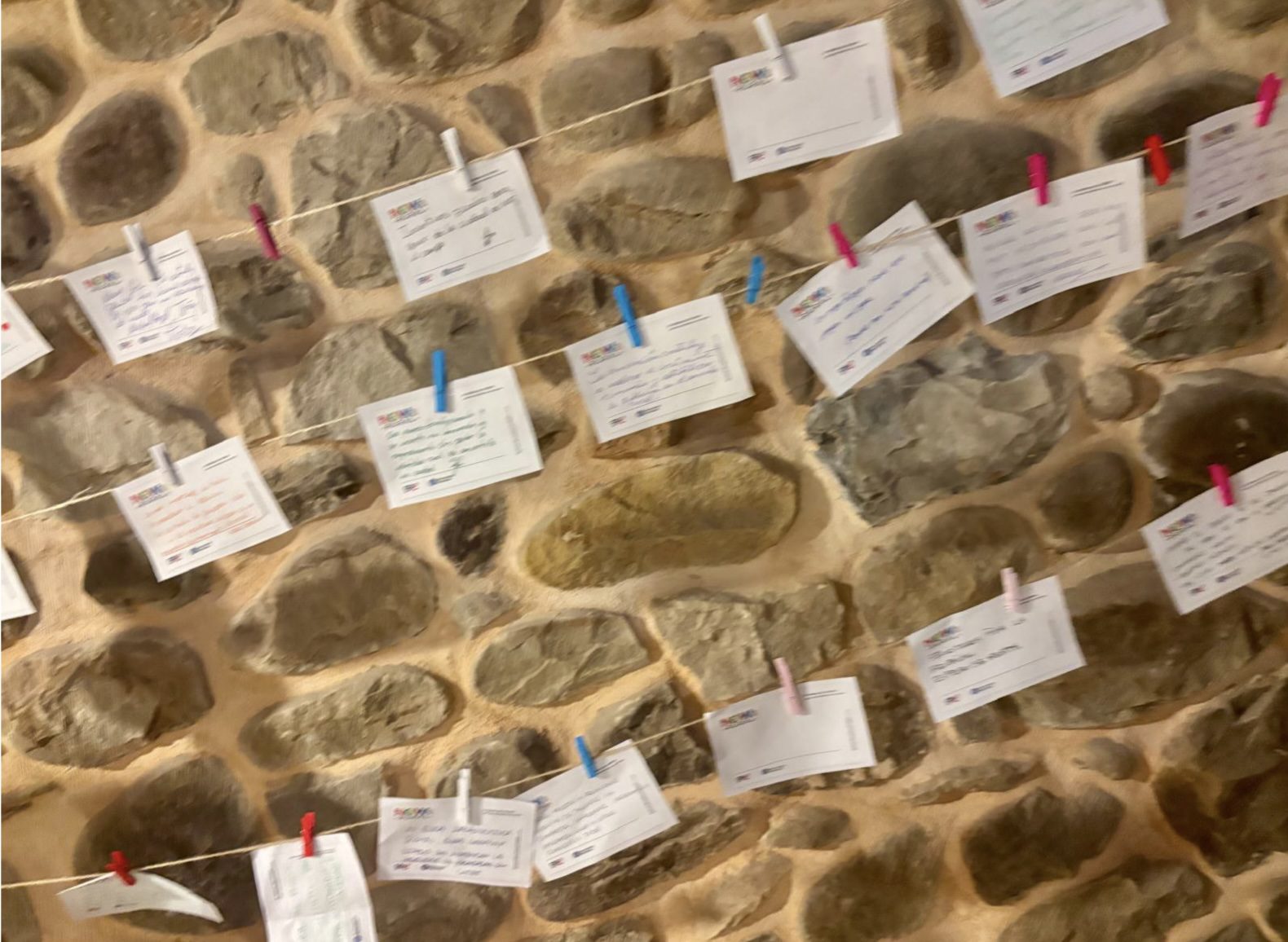
Some of the notes that those attending left on the Tendal del Futuro
At the start of NOW Rural we invited all those attending to write a proposal, a concern or a wish for the future of their villages. The idea was to collectively build a vision of the new rurality. A week later, on rereading those small handwritten notes, I have the feeling that the Tendal ended up becoming a kind of collective manifesto about the future we want to build.
Some of the concerns were very concrete. Making sure there are places to live. Tax benefits. Retaining young talent. They are simple phrases, but behind them there probably appears the greatest challenge facing many rural territories today: making it possible for people to choose to stay, return or build their future here.
Other reflections had to do with identity. Advancing technologically and investing in innovation and entrepreneurship without losing rural identity. Preserving traditions, landscape, customs and community. The most important thing is to try to keep the essence.
These ideas connected directly with what José Manuel had raised during his talk: the need to understand innovation not as a replacement for the traditional rural world, but as a tool to give it new opportunities. Proposals related to collaboration and technology also appeared. Gatherings open to collaborative meetings of talent to share, collaborate and exchange. Many actions would be greatly improved with data shared on a collaborative chain or Betting on projects at home.
In the villages there has to be a bar
One of the most commented notes of the afternoon said: "In the villages there has to be a bar." A week later, I think it contains one of the deepest reflections of the whole day. In a village, a bar is a place for meeting, conversation and community. It is the space where news is exchanged, deals are struck, concerns are shared and, often, collective life is built. It is curious that, on a day when we talked about blockchain, artificial intelligence, tokenization, augmented reality and new digital economies, one of the proposals that generated the most consensus was precisely the need to recover something as apparently simple as a bar.
And perhaps there lies another of the great lessons NOW Rural leaves me with. We can talk about artificial intelligence agents, stablecoins, Ethereum or food traceability. We can imagine new forms of financing, new economic models and new technologies. But, in the end, we still need exactly what human communities have always needed: places where we can meet.
*None of what happened that afternoon in Corvera de Toranzo would have been possible without the generosity of the speakers, the participation of those attending and the collaboration of so many people who believed it was worth opening this conversation. And, very especially, I want to thank the support of the Centro Internacional Santander Emprendimiento (CISE), an institution promoted by the University of Cantabria, the Government of Cantabria and Banco Santander that has been working for more than a decade to foster entrepreneurial culture, innovation and the development of new business and social projects.
Covadonga Fernández is founder and director of the newspaper Observatorio Blockchain. She has worked with various companies developing crypto/blockchain projects, such as Singular DTV, a Switzerland-based platform and a pioneer in decentralizing the film industry, which led her to take part in the 2019 San Sebastián Film Festival. That same year she also took part in the Bern International Film Innovation Festival (Switzerland), with a presentation on linguistic plurality in blockchain. In 2022 she took part in the Acción Cultural Española edition with an article on Metaverse and Culture. In 2017 she wrote the chapter on Blockchain and Journalism in the book: «Blockchain: The Industrial Revolution of the Internet», published by Grupo Planeta. A year earlier, in 2016, she created the first Meetup on Blockchain and Journalism. That same year she also created the Blockchain Media site, to track the decentralization process of the cultural and creative industries. In 2020 she co-organized an event on how blockchain could help the cultural and creative industries, where the money received from sponsors was tokenized and speakers received payment in NFT format. Before founding Blockchain Media and Observatorio Blockchain, Covadonga worked at Grupo Z and the newspaper ABC; she was communications director of the Madrid Chamber of Commerce, a journalism professor at Universidad Carlos III de Madrid and chair of Telemadrid. Winner in the Outreach category at the 2024 Financial Innovation Awards and honored by Alastria at the 2025 Blockchain Awards