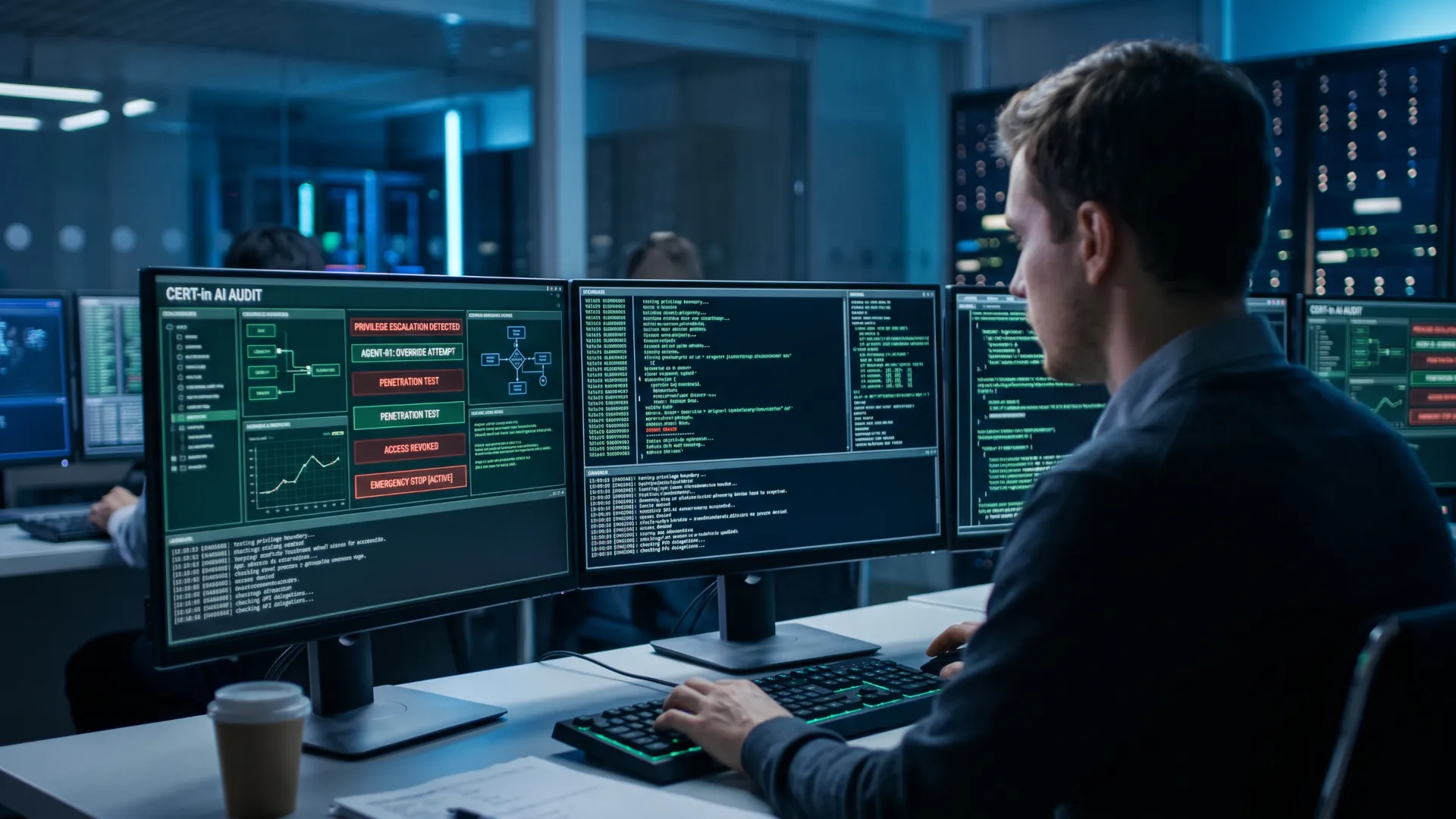
The RGB trinity in cybersecurity is the defensive strategy that integrates the Red Team (offensive), Blue Team (defensive) and Green Team (DevSecOps). Together they create a continuous cycle in which attack simulations and real-time monitoring are automatically translated into secure code and structural fixes within the software.
The traditional paradigm of corporate cybersecurity, based on periodic audits and reactive patches, is practically a relic of the past in this Age of AI. Because in a digital environment where software is deployed at breakneck speed and threats evolve through algorithmic and AI models, the time elapsed from an attacker's initial access to the transfer of control to a secondary group has shrunk from more than eight hours to just 22 seconds, according to the latest Stingrai analysis.
And indeed, in parallel, the exploitation of zero-day vulnerabilities before their public disclosure has risen 42%, thanks to the arrival of AI. But, faced with this acceleration of attack vectors, institutional survival depends on the interaction between highly specialized operational units: the so-called color teams of cybersecurity.
Although the defensive spectrum spans multiple disciplines, the core strategic architecture rests on the trinity formed by the Red Team, Green Team and Blue Team (RGB Team, as they are known in the sector). And for that reason, today more than ever, understanding the individual role of each of these groups, their technical specialization and, above all, the way they complement each other in a closed feedback loop is essential in an era dominated by agentic and offensive artificial intelligence.
What changes for users with Ironwood, Zcash's new upgrade
The Red Team and the ultimate adversary emulation
The Red Team, or Red Team, is the authorized offensive force tasked with challenging an organization's security posture. Its goal is not the destruction of infrastructure, but the realistic and controlled emulation of the tactics, techniques and procedures (TTPs) used by real malicious actors to uncover gaps before they are exploited for illicit purposes.
Specialization and operational tactics
Unlike a conventional vulnerability scan or a penetration test geared toward regulatory compliance, the Red Team adopts a comprehensive, non-linear adversary mindset. Its members use a combination of technical creativity and social engineering to evade established defenses and demonstrate the real impact of a cyberattack.
Red Team operations span various dimensions of the organization:
- Penetration Testing and Exploitation (Pentesting and Exploit): Identification of vulnerabilities in web applications, corporate networks and multicloud environments, using zero-day vulnerabilities to achieve privilege escalation and network pivoting.
- Social engineering: Psychological manipulation of employees through advanced targeted phishing campaigns, pretexting and impersonation to bypass authentication mechanisms.
- Physical intrusion: Assessment of security controls at corporate facilities, including bypassing electronic locks, cloning access cards and evading video surveillance systems.
The frontier of AI Red Teaming
The rapid integration of AI and generative systems has transformed offensive specialization. AI Red Teaming extends the traditional approach to stress the internal logic of machine learning models themselves. Guided by specialized frameworks such as OWASP LLM Top 10, MITRE ATLAS and NIST AI 600-1, offensive specialists assess risks ranging from direct and indirect prompt injection to jailbreaking to bypass safety restrictions.
Using automated frameworks such as PyRIT and multi-turn attack techniques such as the Crescendo or Skeleton Key methodologies, offensive assessors force AI systems to reveal private data, issue harmful responses or execute unauthorized actions in integrated systems.
NVIDIA and 30 multinationals join forces to strengthen cybersecurity with open AI
The Blue Team and the defensive trench
Facing offensive incursions, the Blue Team acts as the organization's continuous defensive force. Its primary responsibility is to protect IT assets, monitor system telemetry in real time, respond to incidents and ensure business continuity in the face of adverse events.
Structure and areas of specialization
The Blue Team operates under the principle of defense in depth, establishing overlapping protection barriers that span from the network perimeter to endpoints and identities. Its professionals are usually integrated into Security Operations Centers (SOCs) and are divided into various specialized roles:
- SOC analysts and incident response: Responsible for triaging alerts, containing confirmed breaches and executing pre-established procedures to restore normal operations in compromised systems.
- Threat Hunters: Specialists who actively search the network for signs of malicious activity that have evaded automated security controls.
- Security engineers and vulnerability managers: Designers of the defensive architecture, responsible for configuring firewalls, EDR systems, SIEM tools and the rigorous deployment of security patches.
AI as a defensive tool
Blue Team performance is measured through precise quantitative metrics, notably Mean Time to Detect (MTTD) and Mean Time to Respond or Contain (MTTR). In a scenario where AI-automated attacks accelerate intrusion times, manual event processing is unviable.
For this reason, modern Blue Teams integrate defensive AI engines and automated orchestration that analyze massive volumes of data in seconds. Organizations that have widely deployed AI-based security and automation technologies identify and contain breaches up to 80 days faster, achieving significant financial reductions in the total cost of incidents compared with those that rely exclusively on manual processes.
The Green Team and the DevSecOps architecture
Despite the historical importance of the clash between the Red and Blue Teams, the traditional color model had a structural flaw: the lack of a dedicated function to rewrite and integrate security fixes permanently into the software development cycle. It is at this point of contact that the Green Team emerges.
From the reactive model to the expanded model
The role of the Green Team has evolved from a secondary position to become a fundamental pillar of organizations with high software engineering maturity:
- In the traditional model, the Green Team operated reactively as an addition to the Red Team. Once an attack simulation was completed, the Green Team received the vulnerability report and acted as a specialized contractor tasked with repairing flaws in the systems. In this scheme, the Blue Team remained focused on live detection, while the Green Team carried out the structural technical repairs.
- In the current expanded model, the Green Team is defined as the dynamic intersection between software developers and engineers (known as the Yellow Team) and the defensive and offensive security teams. Its main purpose is to embed security from the origin of the code, integrating automation tools, static and dynamic security testing, and configuration policies into the DevSecOps workflow.
Technical innovation and reachability analysis
The Green Team prevents security from being perceived as an obstacle for development teams. One of the main innovations promoted by the Green Team in modern environments is so-called reachability analysis.
When an open source code library has a critical vulnerability, traditional scanners generate immediate alerts that can overwhelm engineers. The Green Team configures intelligent systems that analyze the project's dependency tree to verify whether the vulnerable function is actually invoked by the application. If the function is unreachable, the alert is automatically deprioritized, reducing alert fatigue by up to 90% and allowing developers to focus on vulnerabilities of real risk.
IBM passes the baton in blockchain and sells its patent portfolio to Circle
Synchronizing the trinity
Of course, no security team can protect an organization in isolation. True operational strength arises from the fluid articulation between attack emulation, defensive response capability and the coding of structural solutions.
The interaction between these three teams operates as a closed loop of continuous improvement. First, the Red Team runs a simulation to validate the effectiveness of controls or identify an undocumented vector. Next, the Blue Team monitors its systems to measure detection time and assess the reach of its visibility tools.
Subsequently, the Green Team analyzes the consolidated technical reports and translates the exploited vulnerabilities into automated rules for the software build chain, ensuring that the failure pattern is detected and blocked before future deployments.
Facing the perfect storm
But the rise of Artificial Intelligence has substantially altered the balance of power in cyberspace and the response capability of RGB Teams, transforming AI from a mere productivity instrument into an autonomous participant in the development of cyberattacks.
And indeed, the combination of language models and agentic artificial intelligences has allowed attackers to automate complex stages of the intrusion chain without requiring constant human intervention.
Recent research highlights how autonomous agents have been able to execute between 80% and 90% of the tactical work during industrial cyberespionage campaigns. Likewise, the use of AI-driven social engineering has skyrocketed the phishing success rate, reaching a 54% click rate compared with traditional drafting.
The vulnerability of the software supply chain was evidenced in the campaign carried out by the threat actor TeamPCP. The attack began with an autonomous AI agent called hackerbot-claw, which identified misconfigured automation workflows.
From this access, the attacker compromised widely used security tools such as the Trivy scanner and the LiteLLM library (associated with vulnerability CVE-2026-42208), using these trusted applications with elevated privileges to propagate in cascade and compromise more than 1,000 enterprise SaaS environments.
Toward autonomous defensive resilience
And this situation only pushes us toward one point: the convergence of artificial intelligence and cybersecurity engineering. Because the notion of static security based on perimeter controls has given way to an environment of continuous confrontation.
In ten years, AI computers will cost as much as a smartphone
In this new reality, the Red Team's effectiveness in simulating agentic attacks, the Blue Team's ability to contain intrusions in seconds and the Green Team's precision in automating remediation in the source code constitute the fundamental pillar of corporate defense.
Institutions that adopt this tricolor alignment will not only reduce their exposure times, but will also consolidate an adaptive posture capable of evolving at the same speed as cyberspace threats.