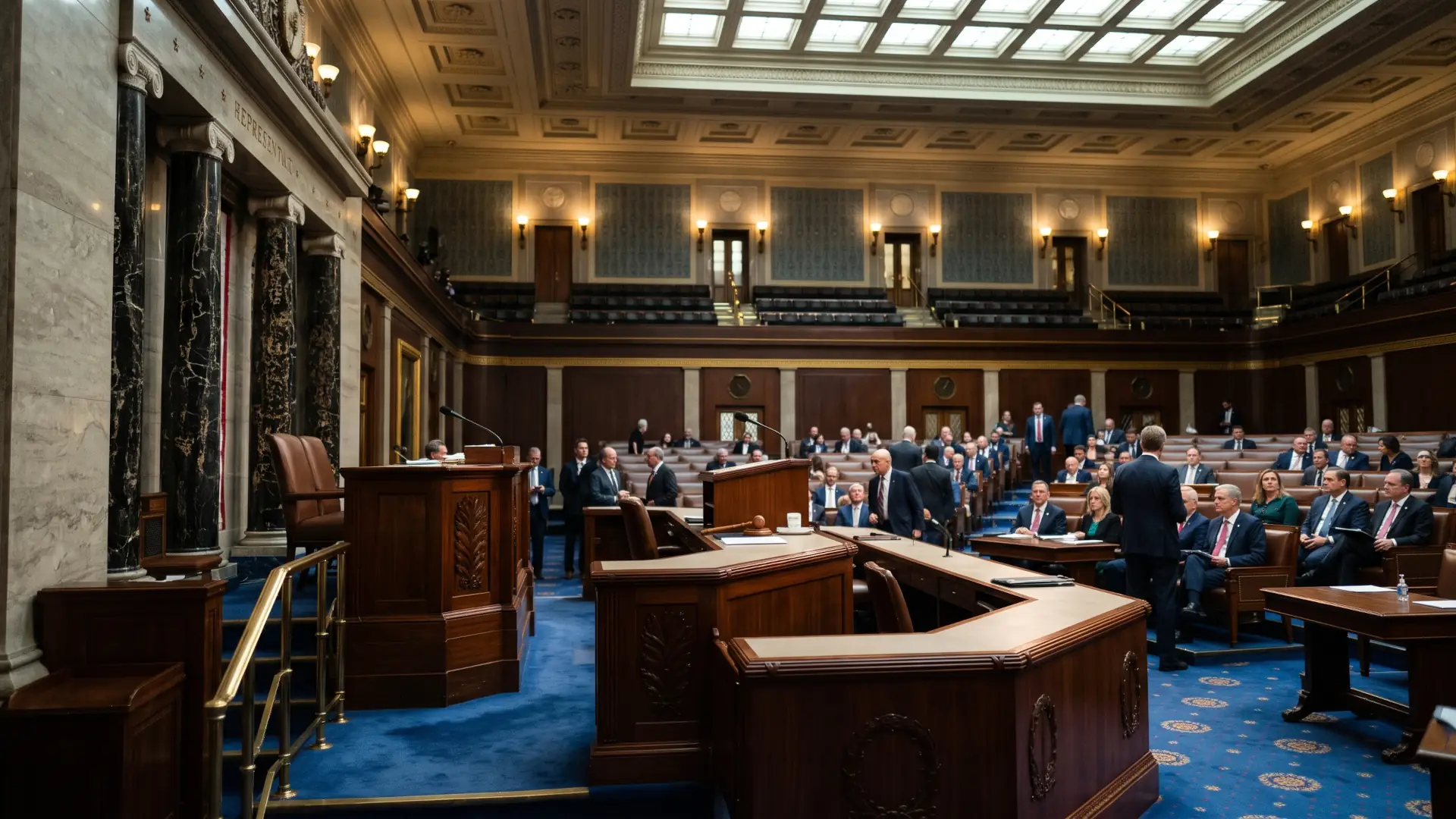
The bill that would turn the US bitcoin reserve into law is ready to be voted on the floor of the House of Representatives. The text, introduced as H.R. 8957, was referred on November 24 with amendments and was placed on the House calendar as number 789. The financial services committee had already approved it on September 16 by 28 votes to 21.
The rule would require the Treasury to create a bitcoin reserve and a separate inventory for the rest of digital assets within 180 days. Bitcoin seized by the Government would go into the reserve, and the other coins into the inventory. The core of the text is a lock: for twenty years those coins could not be sold, exchanged or pledged.
The move matters because the reserve has existed since March 2025 by decree, and a decree is reversed by another. Turning it into law binds the Government for two decades, requires auditing holdings and opens the door for states to custody their own coins within the same federal structure. The text still needs the floor, the Senate and the presidential signature, and the legislative calendar does not help.
A text with a twenty-year lock
The prohibition is literal. For twenty years from entry into force, the Treasury could not sell, exchange, auction, pledge or dispose of the reserve's coins for any purpose. After that period, the secretary could recommend selling up to 10% in any two-year period, always with a prior report to Congress.
The text also sets the accounting. Each agency would have 60 days to declare to the Treasury what bitcoin and what digital assets it holds or has seized. Until the reserve is operational, agencies could not sell those coins except for national security, legal obligation or return to crime victims.
The text of the strategic bitcoin reserve referred to the floor details an annual audit with a public report on holdings, movements and private key control, reviewed by an external auditor with experience in cryptographic attestations. The GAO would monitor it.
What changes compared with the 2025 decree?
The decree that created the reserve in March 2025 did not require buying or holding. It allowed the use of seized coins and left policy in the hands of the Executive, which could change it without going through Congress. The law reverses that logic and turns an administrative decision into a two-decade commitment.
The amended text also cuts the funding sources. The original version explored using Federal Reserve bank remittances or revaluing gold certificates to buy bitcoin. Those options disappeared, and the study accompanying the bill is now limited to swaps, forfeitures and agreements with states or companies.
The wording adds a fiscal safeguard. Nothing in the provisions authorizes borrowing, pledging public assets as collateral, creating taxes or deficit spending to buy bitcoin. The accounting of public holdings is thus tied to what agencies already have, not to new purchases.
The inventory no one has audited
The bill's weak point is the starting point. No one has published a complete, verified inventory of how much bitcoin the federal Government controls, how much comes from seizures and how much has been sold in recent years. The text requires it, but not before passage.
That opacity has precedents. Auctions of seized coins over the past decade have been announced case by case, and the market learned the volume when the money was already out. An annual proof of reserves with an independent auditor would change the information available to anyone who wants to calculate the real supply.
Comparison with other countries helps to gauge it. Sovereign bitcoin reserves remain small relative to the market, and their effect on price is smaller than that of exchange-traded funds. What weighs is the signal: a Government that binds itself by law not to sell for twenty years removes supply from the market.
States will also be able to custody
A little-discussed amendment allows states to keep their own bitcoin in segregated accounts within the federal reserve. They would retain ownership and the right to withdraw the coins, while the Treasury takes on physical custody and auditing. It is a hybrid model that avoids creating twenty different reserves.
The formula has political appeal. States with surpluses could buy without building their own custody infrastructure, and those that already have local laws would have a place to park the coins. It also spreads operational risk across a single audited facility instead of dozens of vaults.
It remains to be seen how that bitcoin is accounted for in each state's public accounts. The text does not clarify whether the value is marked to market or what happens if a state wants to withdraw its coins while the reserve is subject to the federal lock, two questions lawmakers will have to resolve.
The calendar that remains
The bill still needs the floor vote, the Senate filter and the presidential signature. With a compressed legislative calendar and the recent midterm elections, the path is not guaranteed. The committee approved it with bipartisan support and 23 cosponsors, including one Democrat.
If it moves forward, the first consequence will be administrative: the Treasury will have 180 days to define rules, custodians and audit procedures. The second will be market-related, with a structurally more rigid supply for two decades and a public inventory that does not exist today.
The text's reference on the House calendar leaves the debate in the hands of the floor. What is being voted on is not whether the Government should hold bitcoin, because it already does, but whether it can sell it when it suits it politically.